
 Polish
  English
  French
  German
  Spanish
  Italian
  Japanese
  Korean
  Vietnamese
  Thai
Thai  Myanmar
  Albanian
  Khmer
Khmer  Arabic
 When construction professionals discuss surveying accuracy, the conversation often centers on the instrument—the auto level, the digital level, or the total station. But seasoned surveyors know a fundamental truth: even the most precise level cannot compensate for a poor-quality leveling staff.
A leveling staff, also known as a leveling rod or surveyor‘s rod, serves as the vertical reference that transforms a horizontal line of sight into a measurable elevation difference. Without a reliable staff, every reading becomes a gamble—and on a construction site, that gamble translates directly into costly rework, structural misalignment, and compromised safety.
Why a reliable leveling staff matters for precise construction surveying, how to evaluate staff quality, and what to consider before purchasing a telescopic aluminum leveling staff for your team.
What Is a Leveling Staff and Why Does It Matter in Construction Surveying?
The Fundamental Role of the Leveling Staff
A łata poziomująca is a graduated rod used with a leveling instrument to determine the difference in height between points or the height of a point above a vertical datum. In practical terms, it provides the visual scale that the surveyor reads through the level’s telescope to establish finished floor levels, foundation elevations, drainage gradients, and site grading benchmarks.
The staff is not merely an accessory—it is the measurement reference. If the graduations are unclear, the material warps under temperature changes, or the locking mechanism slips during use, the resulting elevation data becomes unreliable regardless of how accurate the level itself may be.
How Staff Errors Translate into Construction Problems
The consequences of an unreliable leveling staff extend far beyond minor measurement discrepancies:
Foundation level errors can lead to structural loading imbalances and costly remediation.
Drainage gradient mistakes may cause water pooling, pipe backflow, or site flooding.
Finished floor level inaccuracies create problems with door alignment, flooring installation, and accessibility compliance.
Earthwork volume miscalculations result in either excessive material costs or insufficient fill.
For contractors working on repetitive tasks such as foundation layout or road works, even a consistent 2–3 mm systematic error can compound across a large site and create significant rework.
Key Features of a Reliable Leveling Staff for Construction Surveying
Clear Graduations and Reading Accuracy
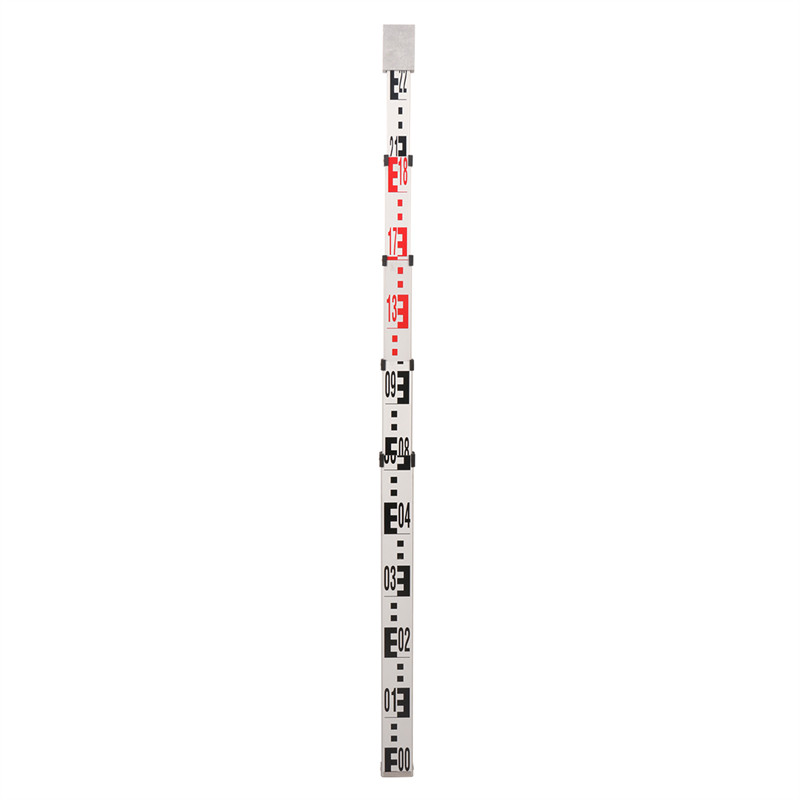
The single most important characteristic of a reliable staff is clear, precise, and durable graduation markings. A standard metric staff features alternating black and red markings on a white background, with the smallest graduation at 1 cm and readings interpolated to the nearest millimeter.
For professional construction surveying, graduations should remain legible from a distance and under variable lighting conditions. Faded or low-contrast markings force the surveyor to guess or re-read, introducing human error into an otherwise precise process.
Material Durability for Harsh Job Site Conditions
Leveling staffs are manufactured from wood, aluminum, or fiberglass, each with distinct advantages and limitations:
Tworzywo | Advantages | Limitations |
|---|---|---|
| Wood | Traditional feel, stable in mild conditions | Susceptible to moisture and temperature changes |
| Aluminium | Lightweight, durable, cost-effective | Prone to corrosion if untreated |
| Fiberglass | Excellent corrosion resistance, non-conductive | Higher cost, slightly heavier |
For most construction surveying applications, anodized aluminum offers the best balance of weight, durability, and cost. The anodized coating provides corrosion resistance while keeping the staff light enough for one-person operation over long distances.
Stability and Locking Mechanisms
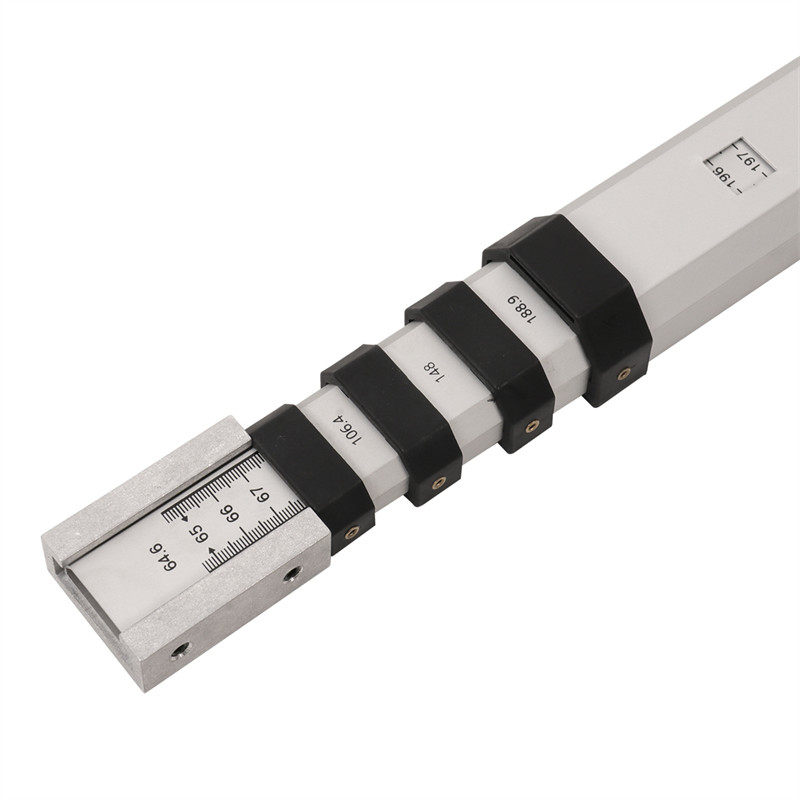
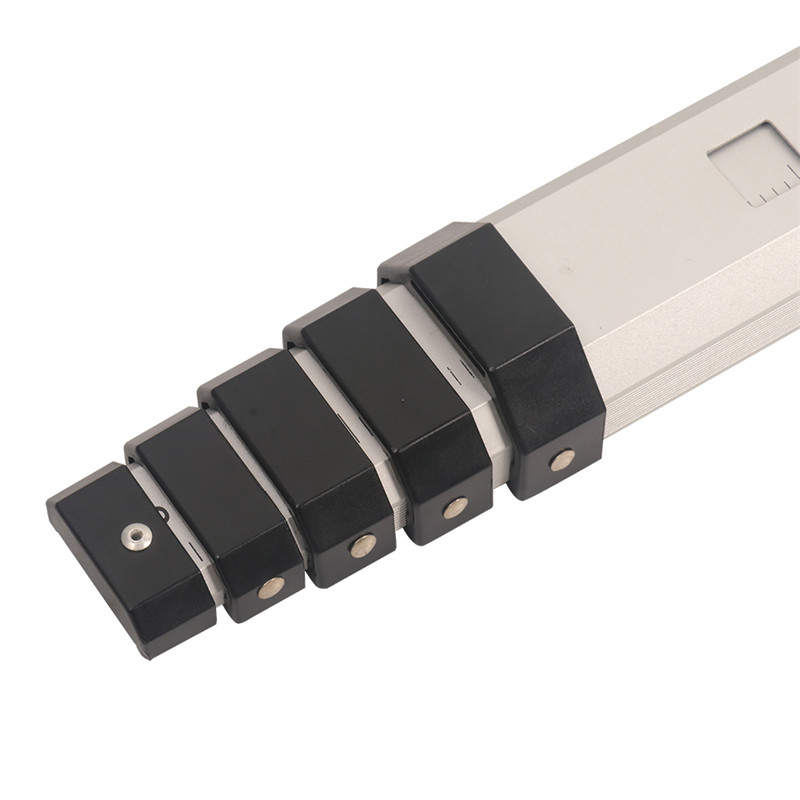
A telescopic aluminum leveling staff must maintain rigidity when fully extended. Inferior locking mechanisms—whether twist-lock or quick-lock—can slip under load, causing the extended length to shift during a reading cycle. This introduces a variable error that is difficult to detect and correct.
K-level‘s LR350 series, for example, offers both twist-lock (LR350-2T) and quick-lock (LR350-2Q) variants, allowing surveyors to choose the mechanism that best suits their workflow while maintaining secure fixation at extended lengths.
Portability and Ease of Transport
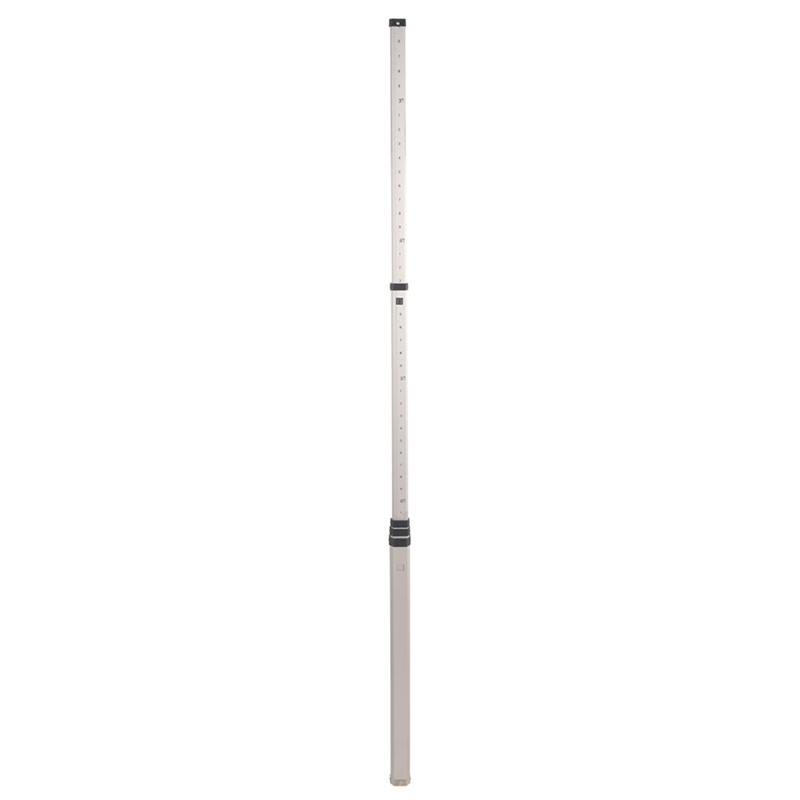
Construction surveying often involves moving between multiple setups across a site. A staff that is difficult to collapse, cumbersome to carry, or prone to jamming in dusty conditions becomes a source of frustration and lost productivity. Consider the closed length and weight when comparing options—a 5-meter staff may close to 1.2 meters or longer depending on the number of sections.
Choosing the Right Telescopic Aluminum Leveling Staff for Your Project
Match Staff Length to Your Typical Surveying Tasks
Staff length should correspond to the vertical range of your typical measurements:
3–4 meter staffs are suitable for building interior work, foundation checks, and finished floor level verification.
5 meter staffs represent the general-purpose standard for most construction, road, drainage, and earthwork applications.
7 meter or longer staffs are appropriate for deep excavation monitoring or specialized geodetic work.
Consider Graduation System Compatibility
Leveling staffs use different graduation systems, including metric E-pattern, metric line-graduation, and barcode patterns for digital levels. Before ordering, confirm that the staff graduation matches your leveling instrument and recording methodology.
For digital levels, the staff must use the specific barcode pattern compatible with the instrument brand—barcode systems are not universally interchangeable.
Evaluate Weight Against Daily Usage Demands
A staff that is comfortable for a 30-minute task may become a burden during an 8-hour shift. For survey teams conducting continuous fieldwork, the difference between a 1.7 kg staff and a 3.0 kg heavy-duty model becomes significant by mid-day. Choose weight according to actual site conditions rather than defaulting to the heaviest option.
Purchase Considerations for Leveling Staffs
What to Check Before Ordering a Leveling Staff
Before placing an order for a telescopic aluminum leveling staff, verify the following specifications:
Extended length and closed length — These determine both measuring range and transport convenience.
Number of sections — Fewer sections generally provide greater stability; more sections offer more compact transport.
Graduation type and pattern — Must match your leveling instrument and recording system.
Material and finish — Anodized aluminum or fiberglass for durability in field conditions.
Locking mechanism type — Twist-lock for secure fixation or quick-lock for rapid adjustments.
Weight — Consider the daily carrying burden for your survey personnel.
Availability of spare parts — Locking buttons, replacement sections, and accessories extend service life.
Contact K-Level for Professional Leveling Staff Solutions
K-Level manufactures high-precision measuring instruments and offers a range of telescopic aluminum leveling staffs designed for professional surveying and construction applications. The LR350-2T/2Q series features high-strength anodized aluminum construction, clear laser-etched graduations, and a choice of locking mechanisms to suit different workflow preferences.
For product inquiries, bulk orders, or technical support, contact K-Level directly. Our team provides consulting services for surveying equipment and can help you select the appropriate staff specification for your project requirements.
Frequently Asked Questions About Leveling Staffs
What is the difference between a leveling staff and a leveling rod?
They are the same tool. “Leveling staff” and “leveling rod” are interchangeable terms referring to the graduated pole used with a leveling instrument to measure elevation differences.
Aluminum or fiberglass leveling staff—which is better?
Aluminum staffs are lightweight, economical, and adequate for occasional or lighter-duty work. Fiberglass staffs offer superior durability, rigidity, and corrosion resistance, making them preferable for daily heavy use or humid environments.
How do I ensure accurate readings with my leveling staff?
Proper plumbing is critical. Use a staff bubble to confirm vertical alignment. For optical levels, gentle rocking helps find the true reading; for digital barcode staffs, keep the rod still and plumb. Attach a bipod for stability during precise leveling loops.
When should I replace my leveling staff?
Consider replacement when graduations become faded or illegible, locking mechanisms slip or jam, sections are bent or damaged, or the base plate shows wear or corrosion. Replacing a damaged staff is more cost-effective than correcting survey errors caused by unreliable equipment.
Can I use any leveling staff with a digital level?
No. Digital levels require barcode staffs with the specific pattern recognized by that instrument brand. Each manufacturer uses a different code, so a staff from one brand may not work with a digital level from another.