 English
  French
  German
  Spanish
  Italian
  Japanese
  Korean
  Vietnamese
  Thai
Thai  Myanmar
  Albanian
  Polish
  Khmer
Khmer  Arabic
 What Is a Laser Level and Why Do You Need One for Construction?
A laser level is an essential electronic tool that projects bright, straight laser beams to create perfectly level or plumb reference lines across walls, floors, and entire construction sites. Unlike traditional bubble levels that only measure a limited span, a construction laser level can cover entire rooms or outdoor areas instantly, saving hours of measuring and marking.
On modern construction sites, laser levels have become indispensable for tasks like squaring walls, leveling ground, establishing slopes, installing drop ceilings, laying tiles, and framing structures. Whether you are an electrician, plumber, HVAC technician, general contractor, or civil engineer, having the right laser level in your toolkit directly impacts your productivity and the quality of your work.
Main Types of Laser Levels for Construction Work
Understanding the different types of laser levels is the first step in making the right choice. The three most common types are rotary laser levels, line laser levels (also called line generators), and dot laser levels.
Line Laser Levels (Cross-Line & Multi-Line)
Line laser levels project one or more fixed straight lines—typically horizontal, vertical, or both—forming a cross or multiple lines for alignment tasks. These are the most common type of laser level for indoor construction work.
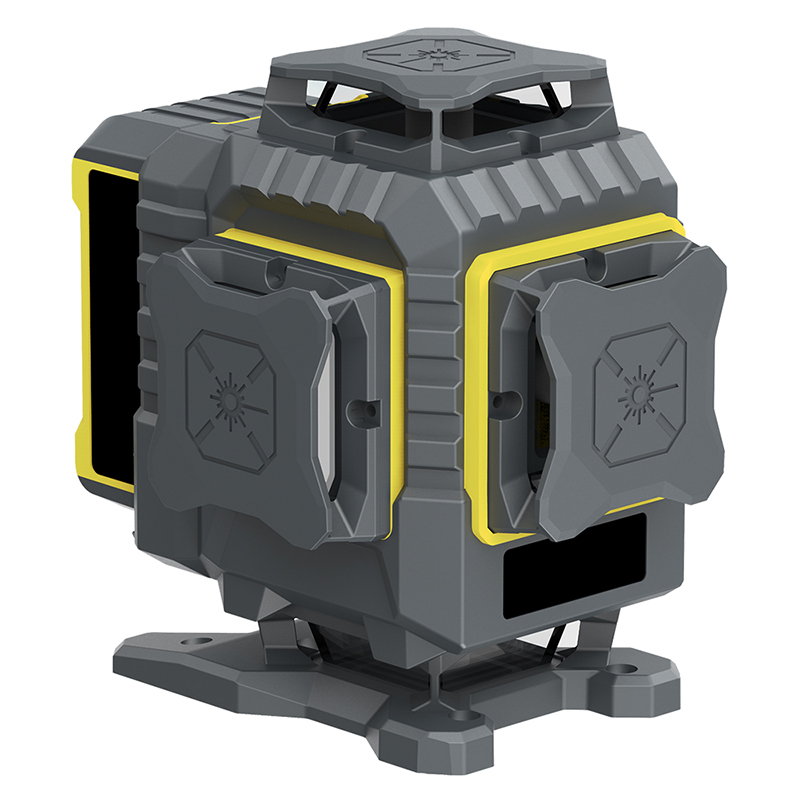
Best for:
Hanging pictures, installing cabinets, and shelving
Tiling and flooring layouts
Drywall installation and framing
Drop ceiling installation
Interior wall layouts
Key specifications:
Range: Typically 50–100 feet
Accuracy: ±1/8 inch at 30 feet (±3mm at 10 meters)
Cross-line laser levels, a subtype of line lasers, project perpendicular horizontal and vertical beams that intersect to create a perfect 90-degree angle reference. Multi-line laser levels can project multiple lines simultaneously, including 360° horizontal and vertical planes.
Rotary Laser Levels
A rotary laser level spins a laser dot at high speed to create a 360° continuous laser plane around the entire worksite. These are the heavy-duty workhorses of the construction laser world.
Best for:
Outdoor grading and excavation
Foundation work and concrete form setting
Large-scale commercial construction
Landscaping and fencing
Site layout and surveying
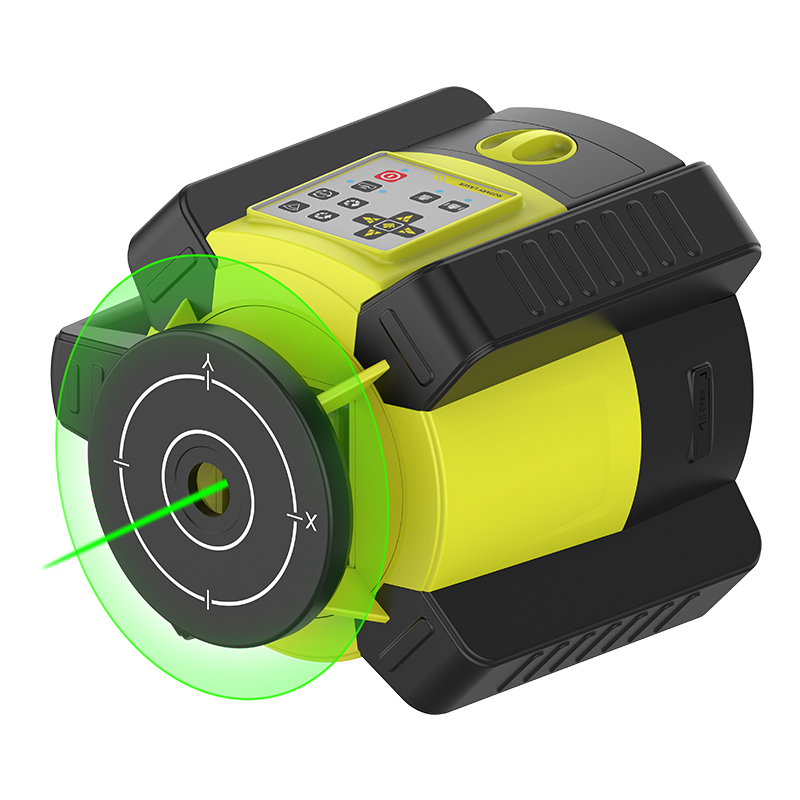
Key specifications:
Range: 500–2,000+ feet with a receiver
Accuracy: ±1/16 inch at 100 feet (typical)
Rotary lasers can be used both indoors and outdoors, but they truly excel in outdoor environments where long-range leveling is required. Most require a laser detector or receiver to read the beam across long distances, especially in bright sunlight.
Dot/Point Laser Levels
Dot laser levels (also called plumb or multi-point laser levels) project individual dots (typically 3–5 points) onto surfaces instead of lines.
Best for:
Plumbing walls and electrical installations
Transferring points from floor to ceiling
Point-to-point alignment
Drywall work
How to Choose the Best Laser Level for Your Construction Project?
Indoor vs Outdoor Laser Level: Which One Do You Need?
One of the most critical decisions in any laser level buying guide is determining where you will primarily use the tool.
For indoor construction work:
Line laser levels (cross-line or multi-line) are usually the best choice
A range of 10–30 meters (33–100 feet) is sufficient for most indoor tasks
Red beams work well in controlled indoor lighting
Self-leveling laser levels are highly recommended for speed and accuracy
For outdoor construction sites:
Rotary laser levels are the preferred choice
You will typically need a laser detector or receiver, as even the brightest visible beam can be lost in daylight
Green beams offer superior visibility outdoors
Look for higher IP ratings (IP54 or better) for dust and water resistance
Laser Level Accuracy: What Do Those Numbers Mean?
Laser level accuracy is typically expressed as a deviation over distance—for example, ±1/8 inch at 30 feet or ±3mm at 10 meters. This means the maximum deviation from true level over that distance.
Accuracy tiers:
Premium models: ±1/16 inch at 33 feet (±1.5mm at 10m) — ultra-precise for finish work and cabinetry
Mid-range models: ±1/8 inch at 30 feet (±3mm at 10m) — suitable for most construction and tiling
Budget models: ±1/4 inch or worse — acceptable for casual DIY but not professional construction
For professional construction or industrial environments, choosing a model with an accuracy of ±1–2 mm at 10 meters is crucial. Remember that with all laser levels, error increases with distance—the best accuracy is achieved when working as close as possible to the laser transmitter.
Laser Level Range: How Far Do You Need to Go?
Laser level range determines the size of the project you can efficiently handle.
Line lasers: Maximum visible range of 50–100 feet; can be slightly extended with a detector
Rotary lasers can be used both indoors and outdoors, but they truly excel in outdoor environments where long-range leveling is required. Most require a laser detector or receiver to read the beam across long distances, especially in bright sunlight.
Dot/Point Laser Levels
Dot laser levels (also called plumb or multi-point laser levels) project individual dots (typically 3–5 points) onto surfaces instead of lines.
Best for:
Plumbing walls and electrical installations
Transferring points from floor to ceiling
Point-to-point alignment
Drywall work
How to Choose the Best Laser Level for Your Construction Project
Indoor vs Outdoor Laser Level: Which One Do You Need?
One of the most critical decisions in any laser level buying guide is determining where you will primarily use the tool.
For indoor construction work:
Line laser levels (cross-line or multi-line) are usually the best choice
A range of 10–30 meters (33–100 feet) is sufficient for most indoor tasks
Red beams work well in controlled indoor lighting
Self-leveling laser levels are highly recommended for speed and accuracy
For outdoor construction sites:
Rotary laser levels are the preferred choice
You will typically need a laser detector or receiver, as even the brightest visible beam can be lost in daylight
Green beams offer superior visibility outdoors
Look for higher IP ratings (IP54 or better) for dust and water resistance
Laser Level Accuracy: What Do Those Numbers Mean?
Laser level accuracy is typically expressed as a deviation over distance—for example, ±1/8 inch at 30 feet or ±3mm at 10 meters. This means the maximum deviation from true level over that distance.
Accuracy tiers:
Premium models: ±1/16 inch at 33 feet (±1.5mm at 10m) — ultra-precise for finish work and cabinetry
Mid-range models: ±1/8 inch at 30 feet (±3mm at 10m) — suitable for most construction and tiling
Budget models: ±1/4 inch or worse — acceptable for casual DIY but not professional construction
For professional construction or industrial environments, choosing a model with an accuracy of ±1–2 mm at 10 meters is crucial. Remember that with all laser levels, error increases with distance—the best accuracy is achieved when working as close as possible to the laser transmitter.
Laser Level Range: How Far Do You Need to Go?
Laser level range determines the size of the project you can efficiently handle.
Line lasers: Maximum visible range of 50–100 feet; can be slightly extended with a detector
Rotary lasers: Can achieve an operating range of 500–2,000 feet with a good receiver
Long range is essential for grading large yards, laying foundations for commercial structures, and installing fence posts on large properties. For small rooms and indoor projects, short-range models work perfectly well.
Green Laser vs Red Laser Level: Which Color Should You Choose?
Green laser levels have become increasingly popular in recent years, and for good reason.
Green lasers are up to four times more visible to the human eye than red lasers
Green beams perform significantly better in bright environments and across longer distances
Green lasers have a larger working range than red ones, making them ideal for construction sites
Red lasers consume less power, are generally more affordable, and perform well indoors where lighting is more controlled
Recommendation: If you work primarily outdoors or in brightly lit environments, invest in a green laser level. For indoor work on a budget, a red laser is usually sufficient.
Advantages of self-leveling:
Greater accuracy than manual leveling lasers
Automatically shuts off if disturbed or moved too far out of level
Saves time and increases reliability on the job site
Ideal for outdoor projects with uneven surfaces
Manual laser levels require the operator to manually level the unit by turning knobs and aligning with bubble vials. They are less expensive and best suited for simple home remodeling projects.
For professional construction work, a self-leveling laser level is almost always the better choice.
Key Features to Look for in a Construction Laser Level
When comparing laser levels for your construction business, pay attention to these features:
Self-Leveling Range — Typically ±4°; wider is better for uneven surfaces
IP Rating — IP54 or higher for dust and water resistance on job sites
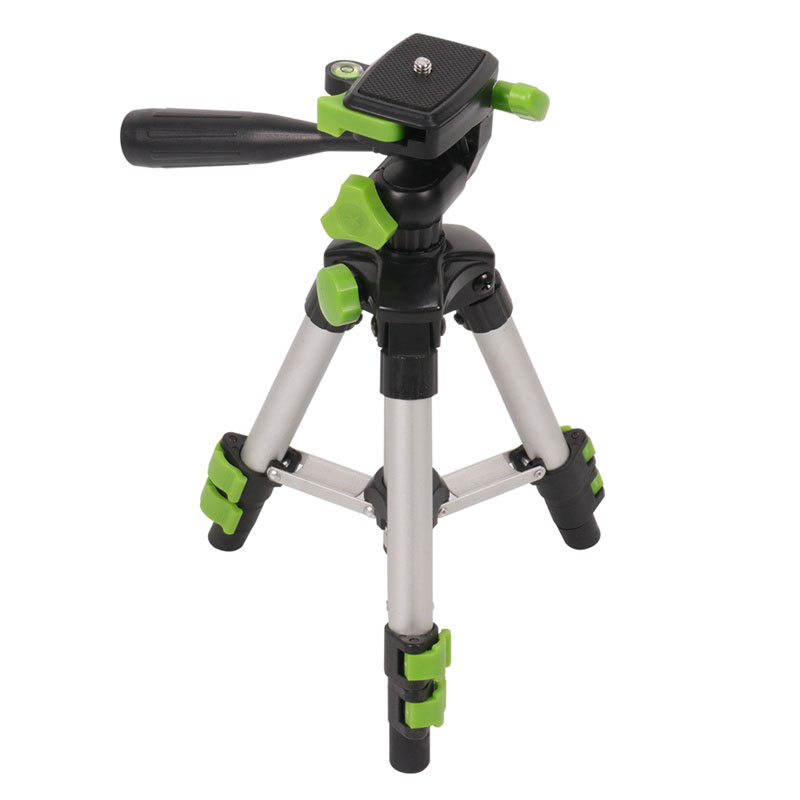
Mounting Options — Magnetic mounts, tripod threads (1/4″-20 or 5/8″-11), and wall brackets
Battery Life — Rechargeable lithium-ion batteries offer longer runtimes and reduce ongoing costs
Pulse Mode — Enables use with laser detectors for outdoor work
Number of Beams — Single-line, cross-line, multi-line, or 360° plane coverage
Laser Level Buying Guide: Budget Considerations
Laser level prices vary widely based on type, features, and brand:
Entry-level line lasers: $50–$150 — Suitable for occasional DIY and light construction work
Mid-range line lasers: $150–$400 — Professional-grade cross-line and multi-line models
Rotary lasers: $300–$1,500+ — Professional tools for large-scale construction
Remember that the cheapest option is not always the most cost-effective. A reliable construction laser level that delivers consistent accuracy will save you time, reduce rework, and ultimately pay for itself.
Important Purchasing Considerations Before You Buy a Laser Level
- Check the kit contents. Many laser levels are sold as kits that include essential accessories like tripods, wall mounts, carrying cases, laser detectors, and grade rods. A complete kit often offers better value than buying components separately.
- Verify detector compatibility. If you plan to work outdoors, ensure the laser level is compatible with a laser detector or receiver. Not all models support this feature.
- Consider the mounting system. Confirm that the laser fits standard tripod threads (usually 1/4″-20 or 5/8″-11). Magnetic mounts are particularly useful for attaching to metal studs or scaffolding.
- Evaluate build quality and durability. Construction sites are tough environments. Look for laser levels with robust, often metal housing designed to withstand dust, water, and impacts.
- Check the warranty and support. Professional-grade laser levels typically come with better warranty coverage and manufacturer support.
- Test the visibility. If possible, see the laser beam in person before buying. What looks bright in a store may not perform well on a bright construction site.
- Consider future needs. Think beyond your current project. A slightly more capable laser level today may save you from buying another tool next year.
Frequently Asked Questions About Laser Levels for Construction
Q1: What is the difference between a line laser and a rotary laser?
A line laser projects fixed straight lines (horizontal, vertical, or crossed) onto nearby surfaces and is best for indoor work like tiling, cabinetry, and framing. A rotary laser spins a beam 360° to create a continuous level plane across large areas and is ideal for outdoor grading, foundation work, and large commercial projects. The rotating laser outperforms the line laser in terms of exterior precision due to its greater range.
Q2: Can I use a line laser level outdoors?
Yes, but with limitations. Line lasers typically have a visible range of 50–100 feet and can struggle in bright sunlight. For outdoor work, a rotary laser with a detector is generally recommended.
Q3: Is a green laser level worth the extra cost?
Yes, for most professional applications. Green lasers are up to four times more visible to the human eye than red lasers, making them significantly better for outdoor work and brightly lit indoor environments.
Q4: What accuracy do I need for construction work?
For most construction tasks, ±1/8 inch at 30 feet (±3mm at 10m) is sufficient. For precision finish work like cabinetry or tile installation, look for ±1/16 inch at 33 feet (±1.5mm at 10m).
Q5: What does a laser detector do?
A laser detector (or receiver) is used to detect the laser beam when it is not visible to the naked eye—typically outdoors in bright sunlight or over long distances. The detector emits visual and audible signals when it finds the beam.
Q6: How do I maintain my laser level?
Keep the unit clean and store it in its protective case when not in use. Avoid dropping or subjecting the tool to severe impacts. For self-leveling models, always lock the pendulum before transporting to prevent damage.
Q7: Can one laser level do everything?
No single laser level is ideal for every application. Most professionals own multiple types—typically a line laser for indoor work and a rotary laser for outdoor projects.