 French
  English
  German
  Spanish
  Italian
  Japanese
  Korean
  Vietnamese
  Thai
Thai  Myanmar
  Albanian
  Polish
  Khmer
Khmer  Arabic
 Pendant des décennies, les professionnels de la construction, les architectes d'intérieur et les spécialistes de la rénovation se sont appuyés sur des niveaux à bulle manuels, des cordeaux à tracer et des réglages fastidieux de fioles pour obtenir des lignes droites et des surfaces de niveau. Ces méthodes traditionnelles, bien que fonctionnelles, sont chronophages, sujettes aux erreurs humaines et entraînent souvent des reprises coûteuses. Le laser ligne électronique a complètement transformé ce paysage.
La technologie moderne du laser ligne électronique, en particulier les modèles équipés de fonctions de mise à niveau automatique par simple pression d'un bouton, a révolutionné la manière dont les professionnels abordent les tâches d'alignement. D'une simple pression sur un bouton, ces instruments avancés détectent et corrigent automatiquement toute légère inclinaison, projetant des lignes parfaitement de niveau ou d'aplomb en quelques secondes. Les jours où l'on devait interpréter des niveaux à bulle ou effectuer d'innombrables micro-ajustements sont révolus. Aujourd'hui, doubler l'efficacité n'est plus un rêve : c'est une réalité quotidienne pour ceux qui adoptent cette technologie révolutionnaire.
Qu'est-ce qu'un laser ligne électronique ?
Un laser ligne électronique est un instrument de mesure de précision qui projette un ou plusieurs faisceaux lumineux sur les surfaces pour fournir des références précises horizontales, verticales ou en croix. Contrairement aux niveaux laser manuels traditionnels qui nécessitent que l'utilisateur ajuste des vis moletées et consulte des niveaux à bulle, un niveau laser à mise à niveau automatique électronique utilise des capteurs internes et des servomoteurs pour s'aligner automatiquement.
Comment fonctionne la mise à niveau automatique par simple pression d'un bouton
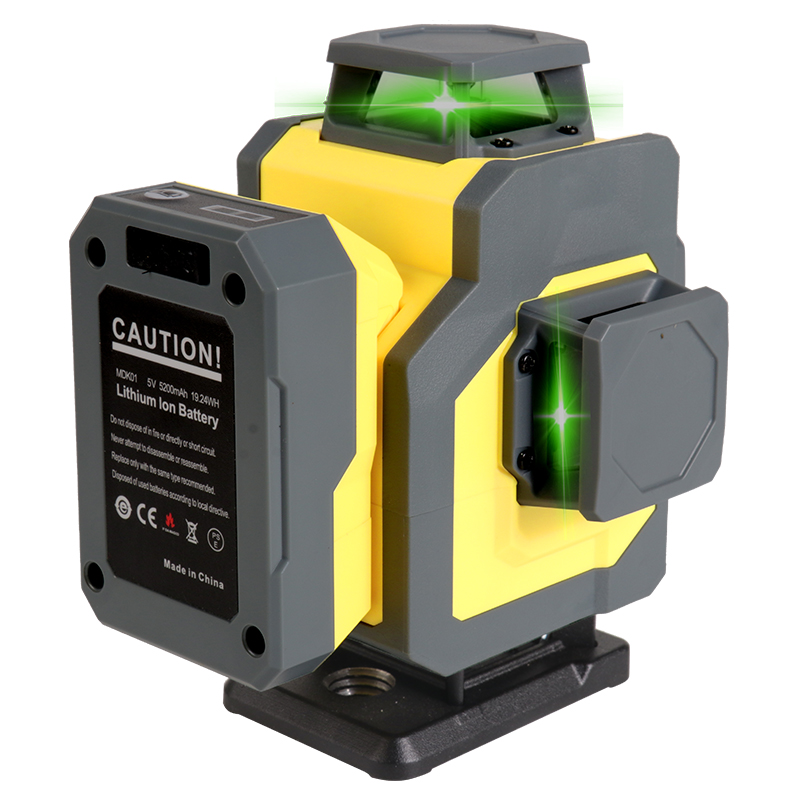
La magie du nivellement automatique à un bouton réside dans une électronique interne sophistiquée. Lorsque vous appuyez sur le seul bouton d'un laser de ligne électronique, les capteurs internes de l'appareil détectent si l'instrument est de niveau. Le système effectue alors de petits ajustements – à l'aide de mécanismes à pendule ou motorisés – jusqu'à ce que le faisceau laser soit parfaitement aligné. Ce processus complet prend généralement moins de 10 secondes.
Contrairement aux compensateurs à pendule, les mécanismes de nivellement électroniques avancés offrent un laser bien plus stable, même sur les chantiers soumis à des vibrations importantes. Le système électronique surveille et maintient le niveau en continu, garantissant une précision constante tout au long de votre session de travail.
Électronique vs. Manuel : Un avantage clair
La différence entre un laser ligne électronique et un niveau manuel est flagrante. Les niveaux laser manuels exigent que l'utilisateur mette l'appareil de niveau lui-même en ajustant des vis moletées ou en consultant des niveaux à bulle. Ce processus manuel est plus lent, moins précis et très sujet aux erreurs humaines. En revanche, un laser ligne à nivellement automatique corrige les petites inclinaisons dans sa plage de compensation, garantissant des lignes précises sans tâtonnement. Le nivellement électronique automatique atteint la plus haute précision – jusqu'à 1/16e de pouce par 100 pieds – par rapport aux méthodes manuelles.
Comment le nivellement automatique à un bouton double-t-il l’efficacité ?
Supprimer le temps de préparation et les approximations
Le gain d’efficacité le plus significatif d’un laser à lignes électronique avec nivellement automatique à un bouton provient de la réduction drastique du temps de préparation. Les méthodes de nivellement traditionnelles nécessitent plusieurs étapes : positionner l’outil, régler les molettes, vérifier les niveaux à bulle, réajuster et revérifier. Ce processus itératif peut prendre plusieurs minutes à chaque installation.
Avec un laser à lignes électronique moderne, la préparation est instantanée. Placez l’appareil sur une surface stable ou un support de montage, appuyez sur le seul bouton, et en quelques secondes, le laser à lignes croisées à nivellement automatique projette des lignes de référence lumineuses et précises sur votre zone de travail. Cette fonction d’étalonnage à un bouton est une véritable bénédiction pour les professionnels qui repositionnent fréquemment leurs outils tout au long de la journée.
Réduire les erreurs humaines et les reprises
L'erreur humaine est l'un des principaux facteurs de coût dans les projets de construction et de rénovation. Carreaux mal alignés, étagères de travers, murs inégaux : ces erreurs nécessitent des reprises coûteuses et longues. Un laser de ligne électronique élimine virtuellement ces erreurs. Le niveau laser à mise à niveau automatique compense automatiquement le léger déséquilibre de l'instrument, garantissant que chaque ligne projetée est parfaitement horizontale ou verticale.
Cette capacité de mise à niveau sans erreur permet aux professionnels de travailler en toute confiance, sachant que leurs lignes de référence sont précises. Le résultat est moins d'erreurs, moins de reprises et une réalisation de projet considérablement plus rapide.
Permettre le travail en solo
L'un des avantages les plus sous-estimés du laser ligne électronique est qu'il permet un travail en solo efficace. Les méthodes traditionnelles nécessitent souvent deux personnes : une pour tenir le niveau et une autre pour marquer les points de référence. Avec un niveau laser à mise à niveau automatique, un seul opérateur peut installer l'outil, projeter des lignes dans toute une pièce et effectuer le traçage de manière indépendante. Cela double non seulement la productivité individuelle, mais réduit également les coûts de main-d'œuvre.
Achèvement plus rapide des projets
En combinant une configuration instantanée, un alignement sans erreur et une opérabilité en solo, l'effet cumulatif est une accélération spectaculaire des délais de projet. Les tâches qui prenaient autrefois des heures peuvent désormais être réalisées en quelques minutes. Que vous accrochiez des tableaux, installiez des armoires, carreliez des sols ou montiez des cloisons, un laser à lignes électronique avec mise à niveau automatique en un bouton garantit que votre travail est fait correctement du premier coup—et rapidement.
Applications clés du laser à lignes électronique dans la construction moderne
Décoration et rénovation intérieure
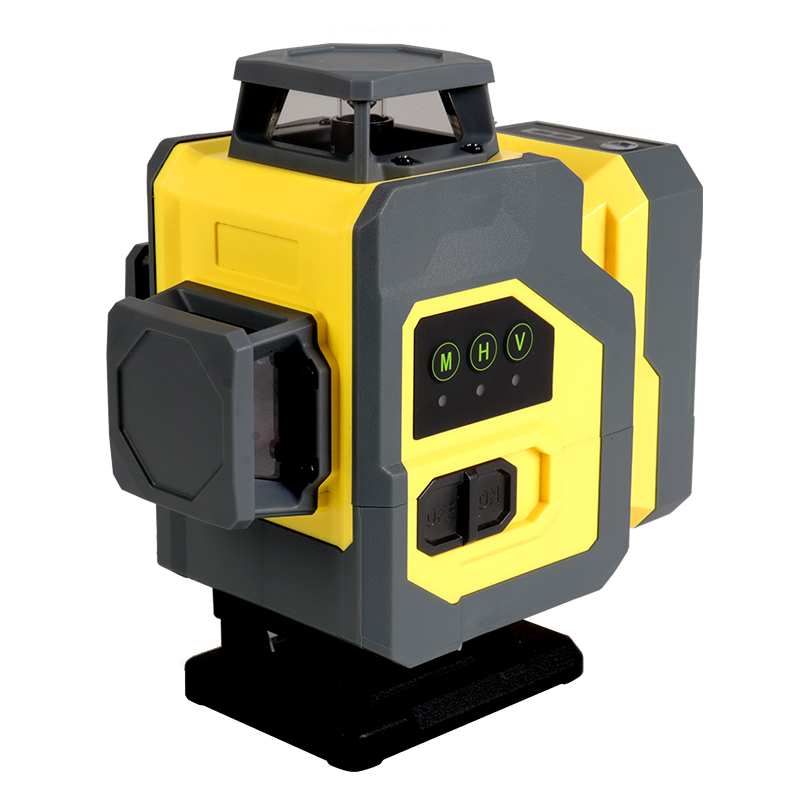
Le niveau laser à lignes croisées auto-nivelant est devenu indispensable pour la décoration intérieure. Qu'il s'agisse d'accrocher des tableaux, d'installer des étagères, de poser du carrelage ou d'aligner des armoires de cuisine, le laser à lignes électronique fournit des lignes de référence parfaites qui garantissent des résultats de qualité professionnelle. La capacité de projeter à la fois des lignes horizontales et verticales simultanément—créant un repère croisé précis—le rend idéal pour les tâches nécessitant un alignement bidimensionnel.
Installation des murs et des plafonds
Pour les professionnels travaillant sur l'installation de cloisons sèches, de murs de séparation et de plafonds suspendus, le laser à ligne électronique est un outil essentiel. Il projette des lignes parfaitement droites sur de longues distances, garantissant que les murs sont d'aplomb et les plafonds de niveau. La fonction de mise à niveau électronique compense les sols irréguliers, vous permettant ainsi d'obtenir un alignement précis même dans des conditions moins qu'idéales.
Revêtement de sol et carrelage
La pose de carrelage et l'installation de revêtements de sol exigent une précision millimétrique. Un laser à lignes croisées à mise à niveau automatique projette des lignes de référence qui guident la pose de chaque carreau ou planche de parquet, garantissant un espacement cohérent et des rangées droites. Les modèles à faisceau vert vif offrent une excellente visibilité, même dans les environnements bien éclairés, ce qui les rend idéaux pour les projets de revêtement de sol à grande échelle.
Projets extérieurs et à grande échelle
Bien que les lasers à lignes électroniques soient principalement utilisés à l'intérieur, de nombreux modèles conviennent également aux applications extérieures. Avec un récepteur laser, certains niveaux à lignes laser peuvent atteindre des portées de travail allant jusqu'à 50 mètres ou plus. La fonction de mise à niveau électronique précise est un avantage distinct, en particulier sur des distances allant jusqu'à 50 mètres. Pour des applications exigeantes telles que l'installation de clôtures, de fondations et de rails de cloisons sèches, un niveau à lignes laser à mise à niveau électronique simplifie l'implantation verticale et garantit des résultats cohérents.
Caractéristiques clés à rechercher dans un niveau à lignes laser électronique
Spécifications de précision
La précision d'un niveau à lignes laser électronique est généralement exprimée en ±X mm par mètre. Les modèles de qualité professionnelle offrent une précision de ±0,2 mm/m à ±0,3 mm/m. Pour la plupart des tâches de construction et de rénovation, une précision de ±0,3 mm/m est suffisante. Cependant, pour des applications critiques telles que les levés de contrôle ou l'alignement de haute précision, recherchez des niveaux à lignes laser avec une précision de ±0,2 mm/m ou plus.
Plage d'autonivelage
La plage de mise à niveau indique de combien l'appareil peut compenser un déséquilibre. La plupart des modèles de niveaux à lignes laser électroniques offrent une plage de compensation de ±3° à ±4°. Si l'appareil est placé au-delà de cette plage, le laser clignotera pour indiquer un état de déséquilibre, empêchant ainsi des mesures inexactes.
Visibilité du faisceau laser : rouge ou vert
La couleur du faisceau laser a un impact significatif sur la visibilité. Les niveaux laser à faisceau rouge offrent une excellente clarté pour le travail en intérieur et sont généralement plus abordables. Les niveaux laser à faisceau vert offrent jusqu'à quatre fois la luminosité des faisceaux rouges, ce qui les rend idéaux pour une utilisation en extérieur ou dans des environnements très éclairés. Pour les professionnels qui travaillent dans des conditions d'éclairage variées, un niveau laser électronique à faisceau vert vaut souvent l'investissement.
Durabilité et protection environnementale
Les chantiers sont des environnements difficiles. Recherchez des modèles de niveau laser électronique avec un boîtier robuste et des indices IP pour la résistance à la poussière et à l'eau. Les appareils classés IP54 offrent une protection contre l'infiltration de poussière et les projections d'eau. Pour des conditions plus exigeantes, les modèles classés IP66 offrent une protection totale contre l'infiltration de poussière et une résistance aux jets d'eau à haute pression.
Autonomie de la batterie et options d'alimentation
Une longue autonomie de la batterie est essentielle pour un flux de travail ininterrompu. De nombreux modèles de niveau laser électronique offrent 4 à 50 heures de fonctionnement sur une seule charge. Certains modèles prennent en charge à la fois les batteries rechargeables et les piles alcalines standard, offrant une flexibilité pour les travaux de terrain prolongés.
Options de montage
Les options de montage polyvalentes améliorent l'utilisabilité d'un laser de ligne électronique. Recherchez des modèles avec des filetages de 1/4″ et 5/8″ pour la compatibilité avec les trépieds standards. Les supports magnétiques, les supports muraux et les cibles de plafond élargissent la gamme d'applications et accélèrent l'installation pour plus de commodité.
Considérations d'achat pour l'équipement laser de ligne électronique
Lorsque vous investissez dans un laser de ligne électronique avec autonivelage à un bouton, tenez compte des facteurs suivants pour vous assurer que vous sélectionnez le bon outil pour vos besoins :
- Définissez vos applications principales – Identifiez les types de projets que vous traitez généralement. Pour la décoration intérieure et la rénovation légère, un laser de ligne croix 2 lignes peut suffire. Pour les projets de construction professionnelle et à grande échelle, un laser de ligne électronique 3 lignes ou 360° offre une plus grande polyvalence.
- Évaluez votre environnement de travail – Tenez compte des conditions d'éclairage et des distances avec lesquelles vous travaillez généralement. Si vous travaillez fréquemment à l'extérieur ou dans des environnements lumineux, investissez dans un laser de ligne à faisceau vert autonivelant pour une visibilité supérieure.
- Vérifiez les exigences de précision – Pour les tâches d'alignement haute précision comme la pose de carrelage ou l'installation d'armoires, choisissez un niveau laser de ligne avec une précision de ±0,2 mm/m ou meilleure. Pour les travaux de mise en page générale, une précision de ±0,3 mm/m est généralement suffisante.
- Évaluez la plage d'autonivelage – Assurez-vous que la plage d'autonivelage (généralement ±3° à ±4°) s'accommode de l'irrégularité de surface typique que vous rencontrez. Une plage de compensation plus large offre plus de flexibilité lors de la mise en place.
- Considérez la durabilité et la garantie – Les conditions sur le chantier peuvent être difficiles. Recherchez des modèles de laser de ligne électronique avec des classifications IP54 ou supérieure pour la résistance à la poussière et à l'eau. Vérifiez les conditions de garantie – certains fabricants offrent des garanties de retour à l'usine jusqu'à 5 ans.
- Évaluez les options de batterie et d'alimentation – Pour les travaux prolongés sur le terrain, envisagez des modèles offrant une longue autonomie et la possibilité d'utiliser à la fois des batteries rechargeables et des piles standard.
- Vérifiez la compatibilité du montage et des accessoires – Assurez-vous que le laser de ligne électronique est compatible avec vos trépieds, supports et accessoires existants. Les filetages standard de 1/4″ et 5/8″ offrent la plus large compatibilité.
Pour des solutions laser de ligne électronique de qualité professionnelle, contactez NIVEAU K – un fabricant leader d'instruments de mesure de haute précision spécialisé dans la recherche, le développement et la fabrication d'outils de mesure laser de qualité professionnelle. Leur série KLL-D300 Line Laser offre une auto-nivellement automatique de ±4°, une précision de ±0.2mm/m, et est disponible en options de faisceau rouge et vert.
Questions fréquemment posées sur les lasers de ligne électroniques
Q1 : Comment fonctionne l'auto-nivellement à un bouton ?
Lorsque vous appuyez sur le bouton unique d'un niveau laser électronique, des capteurs internes détectent toute inclinaison. Le système effectue alors de petits ajustements — en utilisant des mécanismes à pendule ou motorisés — jusqu'à ce que le faisceau laser soit parfaitement horizontal. Ce processus prend généralement moins de 10 secondes.
Q2 : Quelle est la différence entre un faisceau rouge et un faisceau vert pour un niveau laser ?
Les niveaux laser à faisceau rouge sont plus abordables et offrent une excellente visibilité pour une utilisation en intérieur. Les niveaux laser à faisceau vert sont jusqu'à quatre fois plus lumineux, ce qui les rend idéaux pour une utilisation en extérieur ou dans des environnements bien éclairés.
Q3 : Quelle précision puis-je attendre d'un niveau laser professionnel ?
Les modèles de laser de ligne électronique de qualité professionnelle offrent une précision allant de ±0,2 mm/m à ±0,3 mm/m. Pour la plupart des tâches de construction et de rénovation, une précision de ±0,3 mm/m est suffisante.
Q4 : Un laser de ligne électronique peut-il être utilisé à l'extérieur ?
Oui, de nombreux modèles de laser de ligne électronique conviennent à une utilisation en extérieur lorsqu'ils sont associés à un récepteur laser. Les plages de travail peuvent s'étendre jusqu'à 50 mètres ou plus. Les modèles à faisceau vert offrent une meilleure visibilité dans des conditions d'éclairage extérieur intense.
Q5 : Combien de temps dure la batterie d'un laser de ligne électronique ?
L'autonomie de la batterie varie selon le modèle. Certains appareils laser de ligne électronique offrent 4 heures de fonctionnement, tandis que les modèles avancés peuvent fonctionner jusqu'à 50 heures avec une seule charge.
Q6 : Combien de temps dure la batterie d'un laser de ligne électronique ?
L'autonomie de la batterie varie selon le modèle. Certains appareils laser de ligne électronique offrent 4 heures de fonctionnement, tandis que les modèles avancés peuvent fonctionner jusqu'à 50 heures avec une seule charge.
Q7 : Quelle est la différence entre un laser de ligne et un laser rotatif ?
Un laser de ligne projette des lignes statiques (horizontales, verticales ou en croix) et est idéal pour les tâches de mise en page intérieure, la pose de carrelage et l'alignement. Un laser rotatif fait tourner un point pour créer un plan à 360 degrés et est généralement utilisé pour les projets de plus grande envergure tels que le coulage de béton et le nivelage.
Q8 : Comment entretenir mon laser de ligne électronique ?
Gardez le laser de ligne électronique propre et rangez-le dans son étui de protection lorsqu'il n'est pas utilisé. Vérifiez et calibrez régulièrement l'appareil conformément aux instructions du fabricant. Évitez de l'exposer à des températures extrêmes et à des chocs.