 Myanmar
  English
  French
  German
  Spanish
  Italian
  Japanese
  Korean
  Vietnamese
  Thai
Thai  Albanian
  Polish
  Khmer
Khmer  Arabic
 How modern self‑leveling rotary laser levels with IP66 and IP67 ratings keep construction projects on track—rain or shine?
For construction contractors, site grading specialists, and excavation professionals, few things disrupt a project timeline like an unexpected rainstorm. Muddy conditions, waterlogged trenches, and delayed concrete pours are costly enough—but when your precision measuring equipment fails after exposure to moisture, the setback multiplies.
The question every project manager asks after a downpour is simple: Can we resume operations immediately, or do we need to wait for equipment to dry out and recalibrate?
The answer depends entirely on the equipment you’re using. Modern waterproof self‑leveling rotary laser levels are engineered specifically to answer that question with a resounding “yes”—operating as usual, right after the storm passes.
What Makes a Self‑Leveling Rotary Laser Level Truly Weather‑Ready?
Understanding IP Ratings: The Language of Waterproof Protection
Not all rotary laser levels are created equal when it comes to weather resistance. The critical specification to look for is the Ingress Protection (IP) rating—a two‑digit code that tells you exactly how well a device resists dust and moisture.
For outdoor construction applications, the most relevant ratings are:
IP54: Protected against limited dust ingress and water splashes from any direction. Suitable for light outdoor use but not recommended for heavy rain exposure.
IP65: Dust‑tight and protected against water jets. Reliable in harsh weather and dusty job site conditions.
IP66: Dust‑tight and protected against powerful water jets and heavy rain. The industry standard for all‑weather construction lasers.
IP67: Dust‑tight and protected against temporary immersion in water up to 1 metre depth for 30 minutes.
IP68: The highest consumer grade—dust‑tight and protected against continuous immersion.
For contractors working in regions prone to sudden downpours or on sites with significant water exposure, an IP66‑rated self‑leveling rotary laser level or higher is essential.
Beyond Waterproofing: The Complete Extreme Environment Package
True extreme environment readiness goes beyond just keeping water out. Professional‑grade self‑leveling rotary laser levels are built with:
Wide Operating Temperature Ranges – Top‑tier models operate from ‑20°C to +60°C (‑4°F to +140°F) , ensuring reliable performance in freezing winter conditions and scorching summer heat alike. Some units even extend the upper limit to +50°C for year‑round use.
Impact‑Resistant Housings – Reinforced composite or metal housings protect internal components from job site drops and impacts. Many models survive drops from tripod height onto concrete.
Sealed Electronics – Critical internal components are fully sealed against moisture ingress, preventing the corrosion that plagues lesser instruments after rain exposure.
Field‑Tested: Self‑Leveling Rotary Laser Levels in Action After Storms
Case Study: Heavy Rain and Site Grading
Consider a typical site grading operation. A contractor is setting elevations for a commercial building’s foundation pad when an afternoon thunderstorm rolls through. With a waterproof rotary laser level for construction site leveling, the team can:
Wait for the rain to pass (typically 30–60 minutes)
Wipe down the exterior of the laser housing
Power on and resume work immediately—no recalibration needed
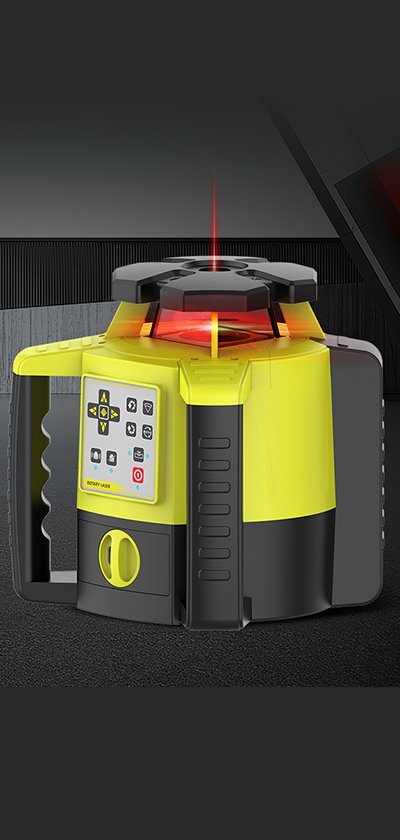
A typical IP66‑rated self‑leveling rotary laser is explicitly designed for this scenario. Its electronic self‑leveling motors are accurate to ±10 arc seconds or better, and if the unit gets disturbed on the job, it relevels itself automatically.
From Excavation to Drainage: Versatile All‑Weather Performance
Rotary laser levels for grading and excavation are particularly dependent on weather resistance. These tools are often used in open sites with no shelter, making them vulnerable to sudden weather changes.
A heavy‑duty self‑leveling rotary laser with an IP66 or IP67 rating is dust‑tight and protected against heavy rain for all‑weather performance. Contractors using such a rotary laser level for excavation and foundation work can maintain productivity regardless of weather conditions.
Real‑World Performance: What Users Say
Field reviews consistently confirm the reliability of waterproof self‑leveling rotary laser levels in adverse conditions. One contractor reported using their IP66 rotary laser level to shoot grades for digging out driveways—work that necessarily occurs in exposed, unpredictable environments. Another noted using their self‑leveling rotary laser level for leveling concrete pads, doing tile work, levelling houses in basements, and for siding installation, demonstrating the versatility these tools bring to both exterior and interior applications.
Technical Specifications: What to Look For in a Waterproof Rotary Laser Level
Accuracy and Range
For professional construction work, accuracy matters as much as durability. Look for:
Leveling Accuracy: ±1/16 inch per 100 feet (±1.5 mm per 30 m) is the industry standard for professional work.
Working Range: With a receiver, top models reach 800 metres (2,600 feet) or more.
Self‑Leveling Range: ±5° is standard, allowing the automatic self‑leveling rotary laser to compensate for uneven setup surfaces.
Power and Runtime
Extended runtime is critical on large job sites. Many self‑leveling rotary laser levels offer:
15–20 hours of continuous operation on a single charge
60+ hours on alkaline batteries
Rechargeable options with included chargers
Beam Visibility
Green beam lasers offer superior visibility in bright sunlight compared to red beams. For contractors working outdoors regularly, a green‑beam self‑leveling rotary laser level is often worth the premium.
Durability That Defines Dependability
Built for the Job Site, Not the Showroom
The most durable rotary laser measurement tools share common design philosophies:
Reinforced Construction – Heavy‑duty housings that absorb impacts rather than transferring them to sensitive internal components.
Sealed Joints and Ports – Every potential entry point for water or dust is sealed, from battery compartments to charging ports.
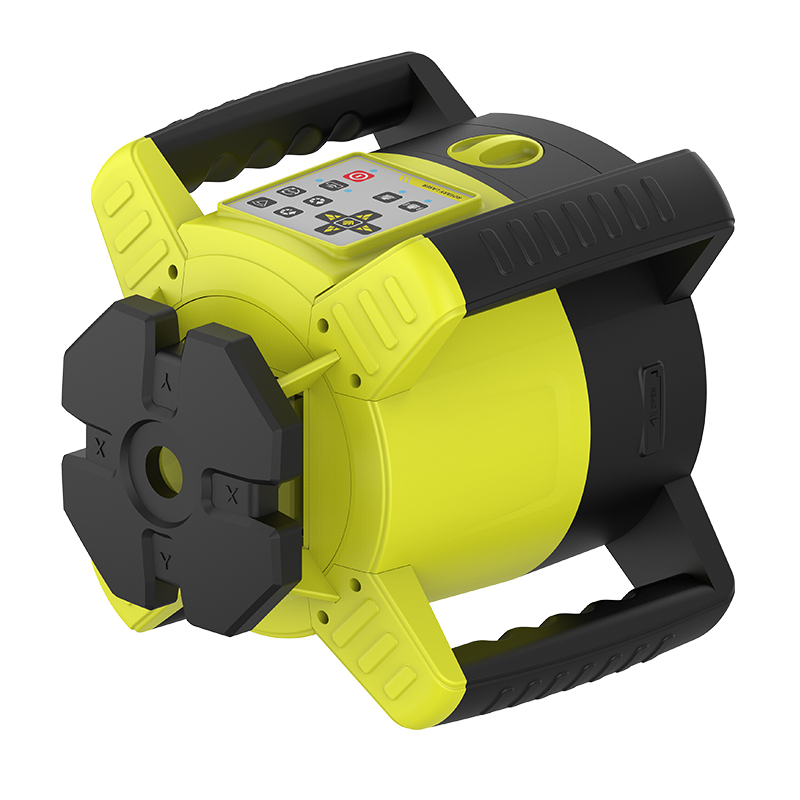
Vibration Resistance – Internal components are shock‑mounted to withstand the constant vibration of construction equipment operating nearby.
The Cost of Compromise
Choosing a rotary laser level without adequate weather protection is a false economy. A single rain event can render an unsealed unit inoperable, costing far more in downtime and replacement than the premium paid for a waterproof self‑leveling rotary laser level.
နိဂုံး
The modern construction site doesn’t stop when the rain starts—and neither should your precision measuring equipment. Waterproof self‑leveling rotary laser levels with IP66 or IP67 ratings are designed to operate “as usual” immediately after rainstorms, keeping projects on schedule and within budget.
Whether you’re performing site grading and drainage layout, setting foundations, or managing excavation and foundation layout, the right rotary laser level for construction ensures you’re never waiting for the weather to cooperate.
Remember: A Self‑Leveling Rotary Lasers are an investment in productivity. Choose one with the IP rating, accuracy, and durability your projects demand—and never let a little rain slow you down again.
Buying Guide: Key Considerations for Purchasing a Rotary Laser Level
When selecting a waterproof self‑leveling rotary laser level for your construction business, consider these factors:
IP Rating – For outdoor work, IP66 minimum is recommended. IP67 offers additional protection against temporary immersion.
Accuracy – ±1/16 inch per 100 feet is the professional standard. Verify the specified accuracy meets your project requirements.
Working Range – Consider your typical site size. Units with 800 m+ range (with receiver) handle most commercial projects.
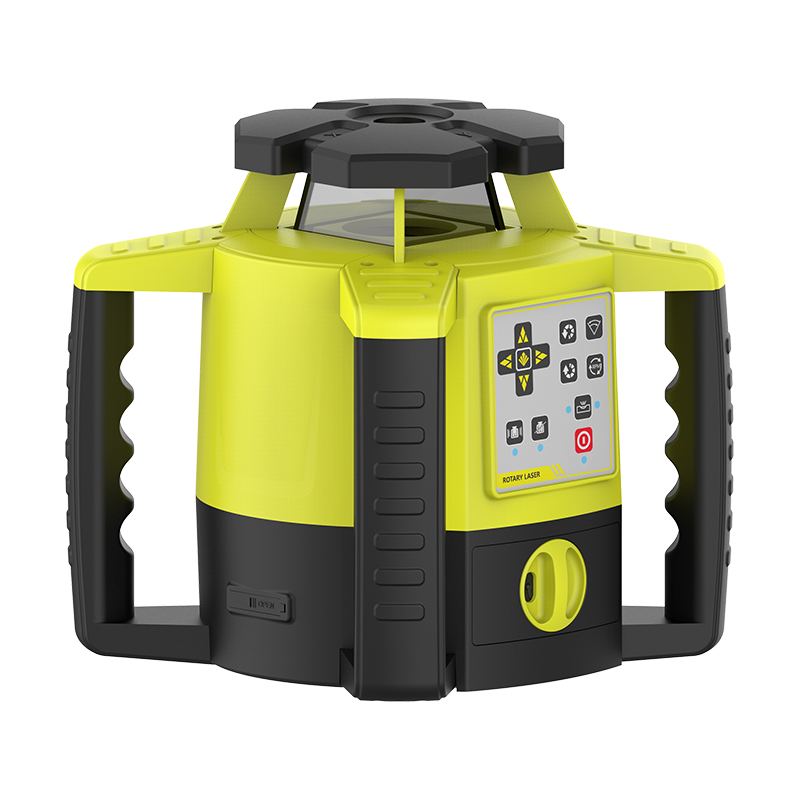
Beam Color – Green beams offer better visibility in sunlight.
Power Source – Rechargeable batteries reduce ongoing costs; alkaline compatibility provides flexibility.
Included Accessories – Complete kits with tripod, receiver, grade rod, and carrying case offer better value.
Operating Temperature Range – Ensure the unit matches your climate conditions. Look for ‑20°C to +50°C minimum for year‑round use.
Warranty and Support – Extended warranties (up to 5 years on some models) indicate manufacturer confidence.
For professional‑grade waterproof self‑leveling rotary laser levels, contact K‑LEVEL directly for product specifications, custom configurations, and bulk pricing. K‑LEVEL’s KRL series offers IP66‑rated durability with advanced self‑leveling technology trusted by contractors worldwide.
Frequently Asked Questions
Q: Can I use a self‑leveling rotary laser level in the rain?
A: Yes—if it has an appropriate IP rating. IP66‑rated rotary laser levels are protected against powerful water jets and heavy rain. IP67 models can even withstand temporary immersion.
Q: What does IP66 mean for a rotary laser level?
A: IP66 means the device is completely dust‑tight and protected against powerful water jets from any direction. It’s the standard for all‑weather rotary laser levels.
Q: How long do waterproof rotary laser levels last after rain exposure?
A: With proper sealing, a waterproof self‑leveling rotary laser level can operate immediately after rain. Simply wipe down the exterior and resume work.
Q: What’s the difference between IP66 and IP67?
A: IP66 protects against powerful water jets; IP67 additionally protects against temporary immersion in water up to 1 metre depth for 30 minutes.
Q: Are green beam rotary laser levels better than red?
A: Green beams are more visible in bright sunlight, making them preferable for outdoor work. Red beams are typically more affordable and sufficient for indoor or low‑light applications.
Q: What accuracy should I expect from a professional rotary laser level?
A: Professional self‑leveling rotary laser levels typically offer ±1/16 inch per 100 feet (±1.5 mm per 30 m) accuracy.
Q: Can I use a rotary laser level for excavation work?
A: Yes. Rotary laser levels for excavation and grading are specifically designed for site preparation, trenching, and elevation control.
Q: What’s the typical operating temperature range?
A: Professional models operate from ‑20°C to +50°C (‑4°F to 122°F) or wider.
Q: Do I need a receiver with my rotary laser level?
A: For outdoor work beyond 100–200 feet, a receiver is essential to detect the laser beam in bright sunlight.
Q: How do I maintain my waterproof rotary laser level?
A: Wipe down after use, store in the provided hard case, and have the unit periodically calibrated to maintain accuracy.