 English
  French
  German
  Spanish
  Italian
  Japanese
  Korean
  Vietnamese
  Thai
Thai  Myanmar
  Albanian
  Polish
  Khmer
Khmer  Arabic
 In the world of construction, interior decoration, and industrial installation, the difference between a successful project and costly rework often comes down to one critical factor: precision. The Electronic Line Laser has emerged as an indispensable tool that fundamentally transforms how professionals approach leveling and alignment tasks.
Unlike traditional manual methods that rely on bubble levels and string lines, modern Electronic Line Laser technology projects highly visible reference lines across walls, floors, and ceilings, enabling workers to achieve consistent, millimeter-level accuracy in a fraction of the time.
The evolution from optical levels to self-leveling electronic line lasers represents a quantum leap in measurement technology. These sophisticated instruments combine laser diodes, precision optics, and electronic compensation systems to automatically establish perfectly horizontal and vertical reference planes.
The Technology Behind Millimeter-Level Accuracy
Electronic line lasers achieve their remarkable precision through a combination of advanced components and intelligent design. At the heart of every quality instrument lies a carefully engineered system that ensures consistent, reliable performance.
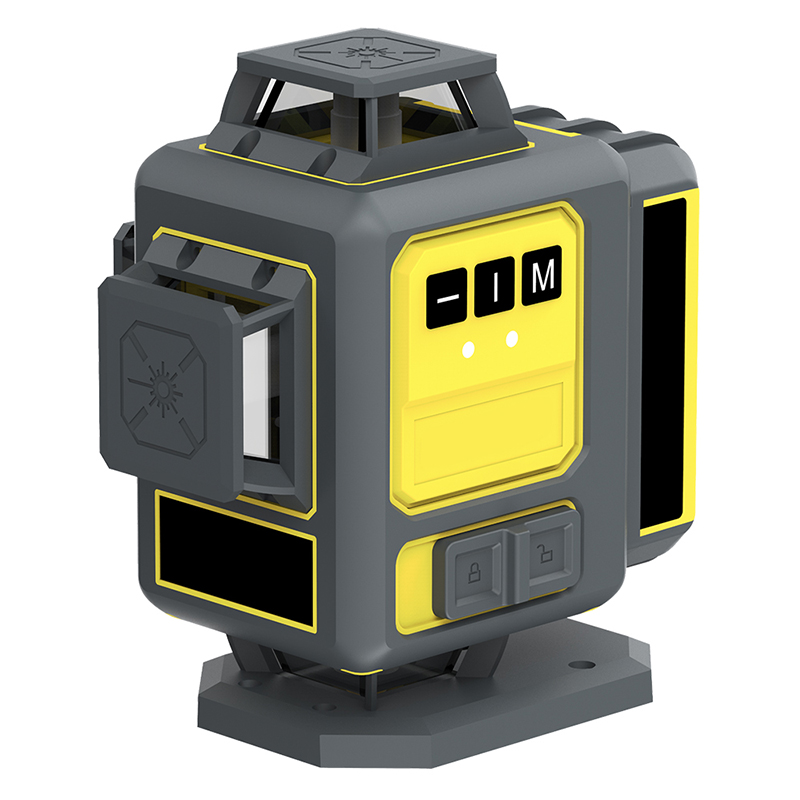
Precision Laser Diode and Optics Integration
The foundation of any electronic line laser is its laser diode and optical system. High-quality line laser modules use class II or class IIIa laser diodes that emit a concentrated beam through specialized cylindrical lenses . These lenses transform the circular laser spot into a thin, uniform line that remains crisp and well-defined across the entire projection area. The optical quality directly determines line width, uniformity, and visibility—critical factors when working at longer distances or in challenging lighting conditions.
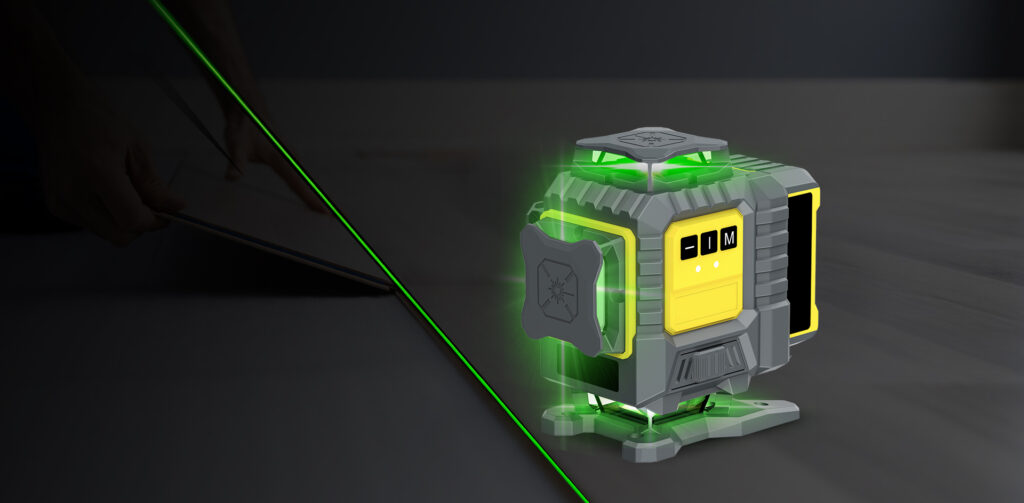
For demanding applications like precision construction leveling tools, manufacturers select laser diodes with excellent wavelength stability and beam characteristics. Red lasers (635-650nm) offer good visibility and affordability, while green laser diodes (515-532nm) provide up to four times greater visibility to the human eye, making them ideal for bright job sites or longer range applications.
Electronic Self-Leveling Compensation
The “electronic” aspect of modern line lasers refers to their automatic self-leveling capability. Unlike simple manual levels that require painstaking adjustment, electronic line lasers incorporate pendulums or electronic sensors that detect deviations from true horizontal and vertical. When the instrument is positioned within its leveling range (typically ±3 to ±5 degrees), internal motors or magnetic damping systems automatically bring the laser lines to perfect alignment.
This laser leveling accuracy typically reaches ±0.2mm per meter or better, meaning that over a 10-meter distance, the error is less than 2mm . Such precision is impossible to achieve consistently with manual methods, particularly on large-scale projects where small angular errors compound over distance.
Durability and Environmental Resistance
Job sites present harsh conditions—dust, moisture, temperature fluctuations, and occasional impacts. Premium electronic line lasers feature rugged housings with IP54 or higher ingress protection ratings, sealing out dust and resisting water spray. Some models incorporate rubber over-molding and shock-absorbing mounts that protect internal components if the unit is knocked over or dropped.
For professionals who depend on their tools daily, durable laser measuring devices with robust construction and reliable component protection represent a worthwhile investment that pays dividends through years of trouble-free service.
Practical Applications Across Industries
The versatility of electronic line lasers makes them valuable across numerous trades and applications. Understanding these use cases helps professionals select the right features for their specific needs.
Construction and Framing Applications
In rough construction, construction laser tools excel at establishing reference lines for walls, partitions, and openings. Framers use horizontal lines to mark top and bottom plates simultaneously, ensuring studs are perfectly plumb and aligned. Vertical lines projected from floor to ceiling guide the placement of wall framing with precision that string lines simply cannot match.
Interior Finishing and Tile Installation
Finish work demands exceptional precision, and interior finish leveling systems deliver exactly that. Tile setters rely on laser lines to maintain consistent grout lines and ensure tiles are perfectly aligned across large floor areas. Horizontal lines projected at working height allow installers to check level continuously without stopping to reposition tools.
For kitchen and bath installations, electronic line lasers ensure that cabinets, countertops, and fixtures are level and properly aligned. Vertical lines help position backsplashes and ensure that wall-hung fixtures are perfectly plumb.
Commercial and Industrial Applications
In commercial settings, industrial alignment lasers prove invaluable for suspended ceiling installation, where hundreds of tiles must align perfectly across expansive spaces. A single laser setup can guide the entire ceiling grid, dramatically reducing measurement time and eliminating errors.
HVAC installers use line lasers to position ductwork and ensure proper slope for drainage. Electrical contractors project reference lines for conduit runs and outlet placement. In every case, the combination of speed and accuracy translates directly to labor savings and improved quality.
Important Considerations When Buying Electronic Line Lasers
Define Your Application Requirements
Start by analyzing the work you perform most frequently. Interior finish contractors need different features than rough framers or exterior construction crews. Consider the typical distances you work at, the lighting conditions you encounter, and whether you need basic leveling or complex multi-line layouts.
For most professional applications, a self-leveling cross-line laser with ±0.2mm/m accuracy provides the versatility needed for daily work. If you frequently work outdoors or at long ranges, consider models with pulse mode operation and compatible laser detectors.
Evaluate Laser Visibility and Color
Laser visibility directly impacts productivity. Green beam lasers offer superior visibility—approximately four times brighter than red to the human eye—making them ideal for bright job sites or longer working distances. However, green lasers typically cost more and consume battery power faster.
Red lasers remain perfectly adequate for indoor work and controlled lighting conditions. Many professionals maintain both types: red lasers for routine indoor work and green lasers for challenging visibility situations.
Assess Accuracy and Leveling Range
Accuracy specifications matter, but higher precision isn’t always necessary. Standard laser level accuracy of ±0.2mm/m satisfies most construction applications. Specialized work like machine alignment or high-end millwork may require ±0.1mm/m or better.
Leveling range—the amount of tilt the instrument can automatically correct—typically spans ±3 to ±5 degrees. Wider range simplifies setup on uneven surfaces but may increase cost. Consider the typical condition of your job sites when evaluating this feature.
For professionals working outdoors or in unconditioned spaces, ensure the operating temperature range matches your climate. Some lasers include built-in temperature compensation that maintains accuracy across temperature swings.
Consider Battery Life and Power Options
Long battery life eliminates workflow interruptions. Modern electronic line lasers use lithium-ion batteries that provide extended runtime—often 20-30 hours continuous operation. Interchangeable battery systems allow swapping depleted packs for fresh ones without waiting for recharging.
Some models accept standard alkaline batteries as backup, providing flexibility when charging isn’t available. For all-day use, consider purchasing spare batteries to ensure uninterrupted operation.
Verify Mounting Options and Accessories
A laser is only as useful as its mounting system. Ensure the instrument features standard 1/4″-20 or 5/8″-11 threads compatible with industry-standard tripods and mounting accessories. Wall mounts, ceiling brackets, and grade rods extend versatility for specific applications.
Quality carrying cases protect your investment during transport and storage. Some manufacturers offer system cases that accommodate the laser, accessories, and spare batteries in organized compartments.
When evaluating professional laser level brands, consider the availability of replacement parts and calibration services. Quality instruments require periodic calibration to maintain accuracy; ensure this service is accessible in your area.
Conclusion
The electronic line laser has truly redefined leveling standards across the construction and finishing industries. By delivering consistent millimeter-level precision, eliminating setup time, and enabling single-operator efficiency, these remarkable instruments have become essential tools for professionals who demand quality results. From basic layout work to complex commercial installations, the right electronic line laser pays for itself many times over through labor savings, reduced rework, and superior finished quality.
When you’re ready to invest in professional-grade measurement equipment that delivers exceptional laser leveling accuracy and reliability, contact K-Level today. As a trusted provider of precision measurement solutions, K-Level offers a comprehensive range of electronic line lasers suited to every application and budget. Our technical experts can help you select the perfect instrument for your specific needs, ensuring you get the right tool for the job. Reach out to K-Level now to discuss your requirements and experience the difference that true millimeter precision makes in your work!