 French
  English
  German
  Spanish
  Italian
  Japanese
  Korean
  Vietnamese
  Thai
Thai  Myanmar
  Albanian
  Polish
  Khmer
Khmer  Arabic
 Dans l'industrie de la construction moderne, la précision est non négociable. Du moment où le premier béton est coulé jusqu'à la pose de la dernière dalle de plafond, chaque mesure doit être exacte, car les erreurs à n'importe quel stade s'accumulent en travaux de correction coûteux, en gaspillage de matériaux et en retards de projet. Pendant des décennies, les entrepreneurs se sont appuyés sur des niveaux à bulle, des niveaux à eau et des théodolites manuels pour établir des points de référence. Ces méthodes fonctionnaient, mais elles étaient lentes, sujettes aux erreurs humaines et nécessitaient plusieurs outils pour différentes tâches.
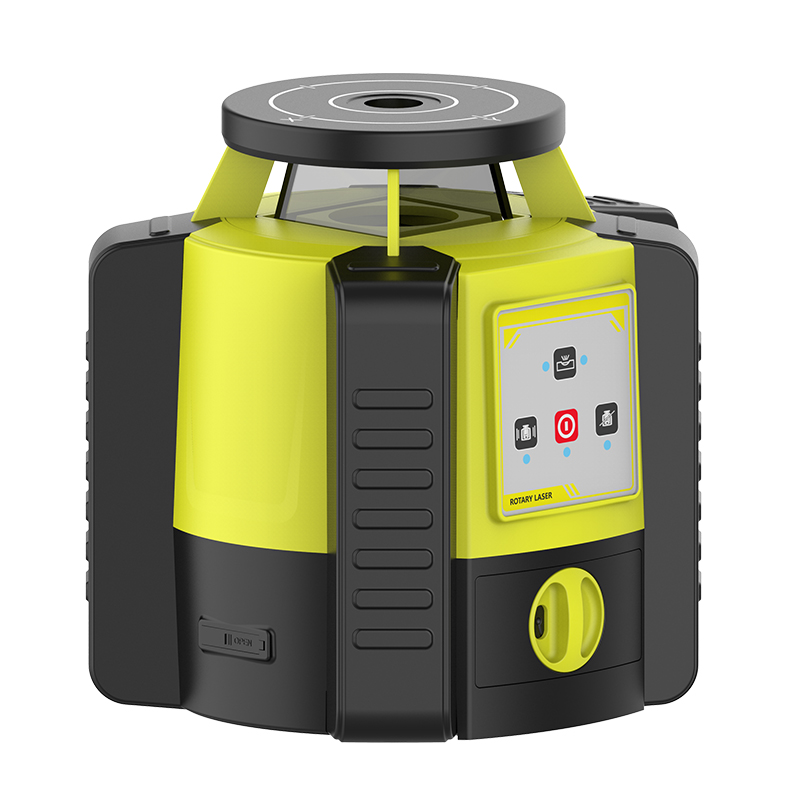
Aujourd'hui, un seul laser rotatif auto-nivelant a transformé le processus de mise en page de la construction. Cet outil polyvalent élimine le besoin de plusieurs instruments de nivellement en fournissant un plan de référence continu à 360 degrés qui couvre un chantier entier. Que vous établissiez des fondations, couliez des dalles de béton, aligniez des murs ou installiez des plafonds suspendus, un seul laser rotatif auto-nivelant peut tout gérer, de la fondation au plafond.
Poser les fondations : Préparation de la fondation et du site
Établir la pente et l'élévation avec un Laser Rotatif Autonivelant
Chaque projet de construction commence par le sol. Avant que toute structure ne puisse s'élever, le site doit être nivelé, excavé et préparé à des élévations précises. C'est là qu'un laser rotatif auto-nivelant prouve sa valeur dès le premier jour.
Les méthodes traditionnelles pour établir la pente nécessitaient de multiples installations, une recalibration constante et des vérifications fréquentes. A laser rotatif auto-nivelant simplifie considérablement cette tâche. Une fois monté sur un trépied robuste et mis sous tension, le mécanisme interne à pendule ou à servo du laser s'auto-nivelle automatiquement dans une tolérance de ±3 à ±5 degrés. En quelques secondes, il projette un plan laser horizontal continu à 360 degrés sur l'ensemble de la zone de travail.
Pour les applications extérieures, le faisceau laser lui-même n'est pas visible en plein soleil sur de longues distances. C'est pourquoi un détecteur laser ou un récepteur laser est essentiel. Le détecteur s'attache à une mire de nivellement et signale acoustiquement quand il s'aligne avec le plan laser, permettant aux équipes de prendre des mesures d'élévation précises sur l'ensemble du site.
Mise en place des coffrages et des semelles en béton
Une fois la cote établie, l'étape suivante essentielle est la mise en place des coffrages et des fondations en béton. Un Niveau Laser Rotatif Auto-Nivelant fournit un plan de référence constant qui garantit que tout le coffrage est mis à la bonne cote.
Pour la mise en place des fondations et des semelles, le faisceau à 360 degrés du laser permet à un seul opérateur de vérifier les cotes en plusieurs points sans déplacer l'instrument. Cela élimine les erreurs de “ déplacement ” qui se produisent lorsqu'on déplace un niveau d'un endroit à un autre. Le résultat est une fondation parfaitement niveau qui prévient les problèmes structurels ultérieurs dans la construction.
Contrôle du Déblai-Remblai et Nivellement du Chantier
Pour les projets nécessitant une pente—comme le drainage, les parkings ou les routes—de nombreux Niveaux Laser Rotatifs Auto-Nivelants offrent des modes de pente double ou de correspondance de cote. Ces fonctionnalités permettent au laser de projeter un plan incliné plutôt qu'un plan niveau, supprimant les calculs pour vérifier la cote et mettre en place le drainage.
Que vous effectuiez des mises en page à cote plate ou un contrôle de déblai-remblai, un niveau laser rotatif pour la construction fournit la précision nécessaire pour déplacer la terre efficacement. Avec une précision typique de ±1/8 pouce à 100 pieds, vous pouvez être certain que votre préparation de chantier répond aux spécifications.
Milieu de construction : Dalles, murs et implantation verticale
Coulage de dalles en béton avec un niveau laser rotatif
Les fondations étant en place, l'attention se porte sur les dalles en béton. Qu'il s'agisse d'une dalle de sous-sol, d'une dalle commerciale au sol ou d'une allée, la dalle doit être parfaitement de niveau pour soutenir la structure au-dessus.
Un niveau laser rotatif auto-nivelant établit un plan de référence qui guide l'ensemble du coulage. Les équipes peuvent vérifier l'élévation du béton au fur et à mesure de sa mise en place, en s'assurant que la surface finie répond à l'épaisseur et à la planéité requises. La performance à longue portée du laser—dépassant souvent 1 000 pieds avec un détecteur—signifie que même les grandes dalles peuvent être coulées avec une précision constante.
Implantation verticale pour murs, cloisons et plaques de plâtre
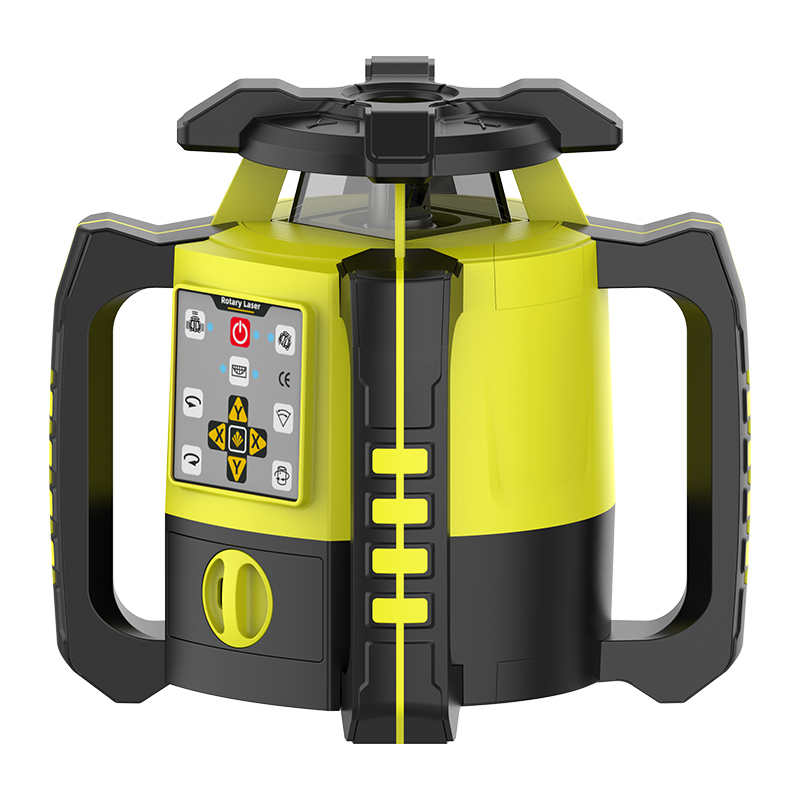
L'une des fonctionnalités les plus puissantes des kits modernes de niveau laser rotatif auto-nivelant est la capacité de fonctionner en modes horizontal et vertical. Lorsqu'il est placé en position verticale, le laser émet un plan vertical idéal pour l'implantation de murs et de sols.
Pour les tâches d'implantation verticale telles que les clôtures, les semelles et les rails de cloison sèche, le mode auto-nivelant vertical élimine le besoin de fils à plomb et de lignes de craie. Le laser projette une référence d'aplomb parfaitement verticale qui guide l'installation des montants muraux, du cadrage des cloisons et de la cloison sèche. Cela est particulièrement précieux pour les immeubles multi-étages où l'alignement vertical doit être maintenu sur plusieurs étages.
Alignement des poteaux, colonnes et éléments structurels
Pour les projets impliquant l'acier de structure, les poteaux ou les colonnes, un niveau laser rotatif fournit la référence d'alignement nécessaire pour assurer la verticalité et l'espacement correct. Les points d'aplomb haut et bas du laser—disponibles sur de nombreux modèles—permettent le transfert précis de points d'un étage à l'autre.
Cette capacité est essentielle pour l'alignement des poteaux ou des semelles, ainsi que pour les murs rideau et les installations mécaniques. En fournissant une référence verticale cohérente, le laser réduit le temps consacré aux mesures manuelles et aux vérifications répétées.
Atteindre le sommet : Installation au plafond et en hauteur
Mise en page de plafond suspendu avec laser rotatif auto-nivelant
À mesure que le projet approche de son terme, l'attention se tourne vers le haut. L'installation de plafonds suspendus—qu'il s'agisse de dalles acoustiques, de faux plafonds ou de systèmes de grille—nécessite une mise en page précise pour assurer une finition professionnelle.
Un laser rotatif auto-nivelant est idéal pour l'installation de plafonds suspendus. Le laser projette un plan horizontal à la hauteur de plafond désirée, offrant une référence continue pour l'installation de la grille de plafond, des luminaires et des composants de ventilation. De nombreux kits incluent des supports mur/plafond qui permettent d'attacher le laser directement à la structure, simplifiant les travaux en hauteur.
Pour les grands espaces commerciaux, la capacité de télécommande du laser permet à un seul opérateur d'ajuster le plan du laser sans monter et descendre les échelles. Cela augmente l'efficacité et réduit le risque d'accidents.
Plafonds acoustiques et plafonds en plaques de plâtre
Pour les installations de plafonds acoustiques et en plaques de plâtre, le laser fournit la référence de niveau nécessaire pour garantir que le plafond fini est parfaitement plat. C'est essentiel tant pour l'esthétique que pour la fonctionnalité : un plafond inégal peut causer des problèmes d'éclairage, d'acoustique et d'ajustement des dalles de plafond.
La vitesse de rotation variable du laser est particulièrement utile pour les applications intérieures. Les vitesses plus lentes rendent le faisceau plus visible dans les conditions d'éclairage intérieur, tandis que les vitesses plus rapides conviennent mieux aux applications extérieures où le faisceau doit être détectable à de plus grandes distances.
Placement de la grille de plafond et des luminaires
Au-delà du plafond lui-même, un laser rotatif d'auto-nivellement guide le placement des luminaires, des têtes d'arrosage et d'autres éléments montés au plafond. En établissant un plan de référence cohérent, le laser assure que tous les éléments sont installés à la bonne hauteur et au bon alignement, créant une apparence uniforme dans tout l'espace.
Certains modèles avancés disposent de modes de balayage qui projettent le faisceau laser uniquement dans une plage d'angles spécifique plutôt que sur les 360 degrés complets. Cela est utile dans les espaces restreints ou lorsque vous travaillez près des murs, car cela empêche le faisceau de se projeter dans des zones où il pourrait être gênant ou dangereux.
Caractéristiques clés qui rendent un niveau laser rotatif à autonivelage indispensable
Une précision sur laquelle vous pouvez compter
La marque distinctive de tout niveau laser rotatif à autonivelage de qualité est sa précision. La plupart des modèles professionnels offrent une précision de ±1/8 pouce sur 100 pieds. Les modèles haut de gamme atteignent des tolérances encore plus étroites de ±1/16 pouce sur 100 pieds.
Ce niveau de précision est essentiel pour la mise en page de la construction, où même de petites erreurs peuvent entraîner des problèmes importants. Avec un niveau laser rotatif à autonivelage, vous pouvez être assuré que votre plan de référence est précis, réduisant ainsi le besoin de vérification constante et de retouches.
Technologie d'auto-nivellement
L“” auto-nivellement » dans Rotary Laser Self-Leveling fait référence à la capacité de l'outil à trouver automatiquement le niveau sans ajustement manuel. En utilisant soit un système de pendule et d'amortissement magnétique, soit des servomoteurs, le laser compense les légères irrégularités de surface.
La plupart des modèles s'auto-nivelleront dans une plage de ±3 à ±5 degrés. Si le laser est placé sur une surface qui dépasse cette plage, des alarmes visuelles et sonores alertent l'utilisateur que l'outil est en dehors de sa plage de nivellement. Cela prévient les lectures inexactes et assure que le laser est toujours utilisé correctement.
Portée et couverture
Un niveau laser rotatif pour la construction est défini par sa portée. Les plages de travail intérieures s'étendent généralement à 200 pieds ou plus, tandis que les plages extérieures—utilisées avec un détecteur laser—peuvent dépasser 1 000 pieds.
Le faisceau rotatif à 360 degrés crée un plan de lumière continu qui couvre l'ensemble du chantier. Cela signifie qu'une seule mise en place peut servir de référence pour les travaux effectués simultanément dans plusieurs zones, ce qui augmente la productivité et réduit le nombre de mises en place requises.
Durabilité pour les conditions de chantier
Les chantiers de construction sont des environnements difficiles, et un niveau laser rotatif à autonivelage doit être conçu pour les supporter. Recherchez des modèles avec des indices de protection IP54 ou supérieurs pour la résistance à la poussière et à l'eau. De nombreux lasers de qualité professionnelle sont testés en chute libre à partir de hauteurs de 1 mètre ou plus.
Les caractéristiques de durabilité supplémentaires incluent des mécanismes de verrouillage qui protègent le pendule interne pendant le transport et un boîtier robuste qui absorbe les chocs. Ces caractéristiques garantissent que votre investissement dans un kit de niveau laser rotatif à autonivelage dure des années d'utilisation exigeante.
Alimentation et autonomie de la batterie
L'autonomie de la batterie est un facteur critique pour tout outil de chantier. De nombreux niveaux laser rotatifs auto-nivelants offrent une autonomie dépassant 60 heures avec un jeu de piles alcalines. Des options rechargeables sont également disponibles, certains modèles étant équipés de batteries NiMH rechargeables qui peuvent être rechargées dans l'appareil.
La possibilité d'utiliser des piles alcalines ou rechargeables offre de la flexibilité pour les projets prolongés et les chantiers éloignés où les prises électriques peuvent ne pas être disponibles.
Acheter un niveau laser rotatif auto-nivelant – Ce qu'il faut rechercher
Investir dans un niveau laser rotatif auto-nivelant est une décision importante.
Voici les facteurs clés à considérer avant de faire votre achat :
- Exigences de précision
Pour la plupart des applications de construction, une précision de ±1/8 pouce à 100 pieds est suffisante. Cependant, si vos travaux nécessitent des tolérances plus strictes—par exemple pour les finitions haut de gamme ou l'installation d'équipements de précision—recherchez des modèles offrant une précision de ±1/16 pouce à 100 pieds. - Portée de travail
Tenez compte de la taille de vos projets typiques. Si vous travaillez principalement à l'intérieur, une portée de 200 pieds peut suffire. Pour les travaux de terrassement extérieurs, les fondations ou les grands projets commerciaux, vous aurez besoin d'un niveau laser rotatif avec une portée de 1 000 pieds ou plus lorsqu'il est utilisé avec un détecteur laser. - Plage d'autonivelage
La plupart des niveaux laser rotatifs à autonivelage s'autonivelent dans une plage de ±3 à ±5 degrés. Une plage d'autonivelage plus large signifie que l'outil peut compenser davantage d'irrégularités de surface, réduisant ainsi le temps de mise en place. - Couleur du faisceau : vert ou rouge
Les lasers à faisceau vert sont jusqu'à quatre fois plus visibles que les faisceaux rouges, ce qui les rend idéaux pour les applications intérieures où la visibilité est essentielle. Cependant, ils sont généralement plus coûteux. Les lasers à faisceau rouge sont plus économiques et fonctionnent bien en extérieur lorsqu'ils sont associés à un détecteur.
- Vitesse de rotation et modes de balayage
Les vitesses de rotation variables vous permettent d'ajuster le faisceau selon les conditions—vitesses plus lentes pour la visibilité intérieure, vitesses plus rapides pour la détection en extérieur. Les modes de balayage vous permettent de limiter le faisceau à une plage d'angle spécifique, utile dans les espaces exigus. - Durabilité et résistance aux intempéries
Recherchez des indices de protection IP54 ou supérieurs pour la résistance à la poussière et à l'eau. Si vous travaillez dans des conditions particulièrement difficiles, envisagez des modèles avec des indices de protection IP66 ou IP67.
Questions fréquemment posées sur le laser rotatif à nivellement automatique
Q : Quelle est la différence entre un laser rotatif auto-nivelant et un laser rotatif manuel ?
R : Un laser rotatif à nivellement automatique s'ajuste automatiquement pour trouver le niveau en utilisant un pendule interne ou un système de servo. Un laser rotatif manuel nécessite que l'utilisateur nivelle l'outil à l'aide de niveaux à bulle, ce qui est plus lent et plus sujet aux erreurs humaines. Les modèles à nivellement automatique sont le meilleur choix pour la plupart des utilisateurs en raison de leur rapidité et de leur précision.
Q : Ai-je besoin d'un détecteur laser pour mon niveau laser rotatif auto-nivelant ?
R : Pour les applications extérieures ou les longues distances, oui. Le faisceau laser n'est pas visible à l'œil nu en plein soleil au-delà de courtes distances. Un détecteur laser ou un récepteur s'attache à une règle de pente et signale audiblement lorsqu'il s'aligne avec le plan laser. Pour une utilisation intérieure dans des espaces faiblement éclairés, le faisceau est souvent visible sans détecteur.
Q : Quelle est la précision d'un niveau laser rotatif auto-nivelant ?
R : La plupart des modèles de qualité professionnelle offrent une précision de ±1/8 pouce à 100 pieds. Les modèles haut de gamme atteignent ±1/16 pouce à 100 pieds. La précision peut varier selon le modèle, alors consultez toujours les spécifications avant d'acheter.
Q : Puis-je utiliser un niveau laser rotatif auto-nivelant pour la mise en page verticale ?
R: Oui. De nombreux niveaux laser rotatifs à nivellement automatique peuvent être utilisés en position verticale pour projeter un plan vertical. Ceci est idéal pour tracer des murs, aligner les montants et installer les rails de cloison sèche. Certains modèles disposent également de points de plomb vers le haut et vers le bas pour transférer des points de référence entre les étages.
Q: Quelle est la durée de vie des piles dans un niveau laser rotatif à nivellement automatique?
R: L'autonomie des piles varie selon le modèle. De nombreuses unités offrent plus de 60 heures de fonctionnement continu sur piles alcalines. Les modèles rechargeables offrent généralement de 8 à 12 heures d'utilisation par charge. Portez toujours des piles de secours ou une source d'alimentation de secours pour les projets prolongés.
Q: Que signifie la classification IP pour un niveau laser rotatif?
R: La classification IP (Indice de Protection) indique le niveau de protection contre la poussière et l'eau. IP54 signifie que l'appareil est protégé contre la poussière et résistant aux éclaboussures. IP66 offre une protection complète contre la poussière et une protection contre les jets d'eau puissants. IP67 offre une protection contre l'immersion temporaire dans l'eau. Les classifications plus élevées indiquent une plus grande durabilité dans les conditions difficiles des chantiers.
Conclusion
Du moment où le premier piquet de nivellement est enfoncé jusqu'à la pose de la dernière dalle de plafond, un seul laser rotatif auto-nivelant sert de fondation à la mise en page de la construction. Il élimine le besoin de plusieurs outils, réduit le temps de mise en place et fournit la précision que la construction moderne exige.
Au stade des fondations, il établit le niveau et guide le placement des coffrages de béton. En cours de construction, il garantit que les dalles sont de niveau et que les murs sont d'aplomb. Au stade de la finition, il permet l'installation précise du plafond suspendu et l'alignement des accessoires. Tout au long du processus, sa technologie auto-nivelante, ses performances longue portée et sa construction durable en font un outil indispensable pour les entrepreneurs, les équipes de mise en page de chantier et les professionnels de la construction.