
 English
  French
  German
  Spanish
  Italian
  Japanese
  Korean
  Vietnamese
  Thai
Thai  Myanmar
  Albanian
  Polish
  Khmer
Khmer  Arabic
 In modern construction and earthmoving projects, accurate grading is essential for excavation, road construction, drainage, foundations, and site preparation. Traditionally, operators rely on workers using grade rods, measuring tools, and repeated manual checks to confirm whether the working surface has reached the required elevation.
However, this process can take considerable time, especially on large construction sites. A Machine Control Laser Receiver provides another solution by giving machine operators a direct laser-based grade reference while they work.
So, which method saves more time: a Machine Control Laser Receiver or manual grade checking? For many grading and excavation applications, machine-mounted laser receivers can significantly reduce unnecessary stops, repeated measurements, and communication between operators and ground personnel.
What Is a Machine Control Laser Receiver?
A Machine Control Laser Receiver is a laser detection device mounted directly on construction equipment such as excavators, bulldozers, graders, backhoes, and other earthmoving machinery.
The receiver detects the beam from a rotating laser and provides visual information showing whether the machine attachment is above, below, or at the target grade. Depending on the system, operators can monitor the information directly from the receiver or through a remote display inside the cab.
This creates a simple workflow:
Rotating Laser → Machine Control Laser Receiver → Grade Information → Operator Adjustment
Instead of stopping the machine and waiting for someone to check the elevation, the operator can use the laser reference while performing grading or excavation work.
Manual Grade Checking: Where Does the Time Go?
Manual grade checking is still useful for many construction applications. However, it usually requires several steps.
- Stop the Machine
The operator may need to stop excavation or grading so that the current elevation can be checked safely.
- Measure the Grade
A worker uses a grade rod, laser receiver, measuring equipment, or other tools to determine the current elevation.
- Communicate the Result
The measurement must then be communicated to the machine operator.
- Adjust the Machine
The operator makes the necessary adjustment and continues working.
- Repeat the Process
Large areas may require repeated measurements to maintain consistent elevation.
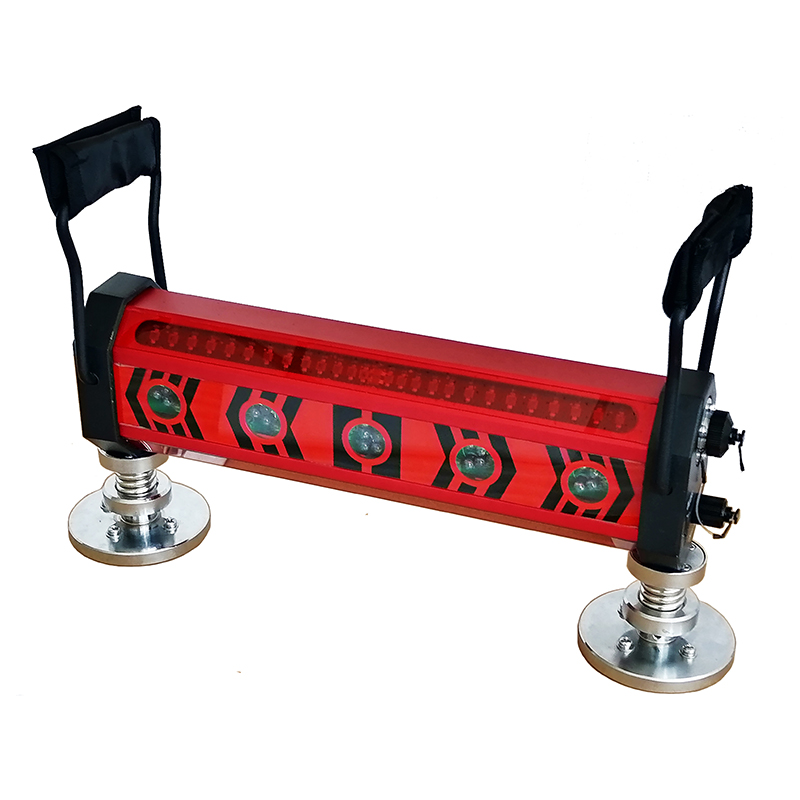
This workflow can become inefficient when the machine needs frequent grade checks. More workers, more machine stops, and more repeated measurements can all increase project time.
How a Machine Control Laser Receiver Saves Time
Continuous Grade Reference
One of the biggest advantages of a Machine Control Laser Receiver for excavators and grading equipment is that it provides a continuous reference while the machine is operating.
The operator does not need to wait for a worker to perform every individual measurement. The laser receiver detects the rotating laser and provides immediate grade information.
This can make it easier to maintain the required elevation during:
Excavation
Site preparation
Road construction
Drainage installation
Foundation excavation
Land leveling
Building pad preparation
General earthwork
Industry solutions commonly position laser receivers as tools for both machine control and grade checking, particularly on excavators, bulldozers, graders, and compact construction equipment.
Fewer Machine Stops
Every unnecessary machine stop can affect productivity.
With a machine-mounted laser receiver, the operator can receive grade information without repeatedly leaving the cab or waiting for a separate manual measurement.
This is particularly useful when working across large areas where elevation needs to remain consistent.
Less Manual Communication
Manual grade checking often requires communication between the machine operator and a ground worker.
A laser receiver for construction grading can reduce this dependence by putting grade information closer to the operator.
The result is a simpler workflow:
Check → Adjust → Continue Working
rather than:
Stop → Measure → Communicate → Adjust → Continue
Reduced Risk of Over-Cutting and Under-Cutting
Incorrect elevation can lead to additional excavation, filling, grading, or finishing work.
A properly installed Machine Control Laser Receiver helps operators maintain a more consistent laser reference during the working process. This can reduce unnecessary material movement and help limit rework.
Machine receiver systems are specifically promoted for reducing over- and under-cutting and improving grade consistency.
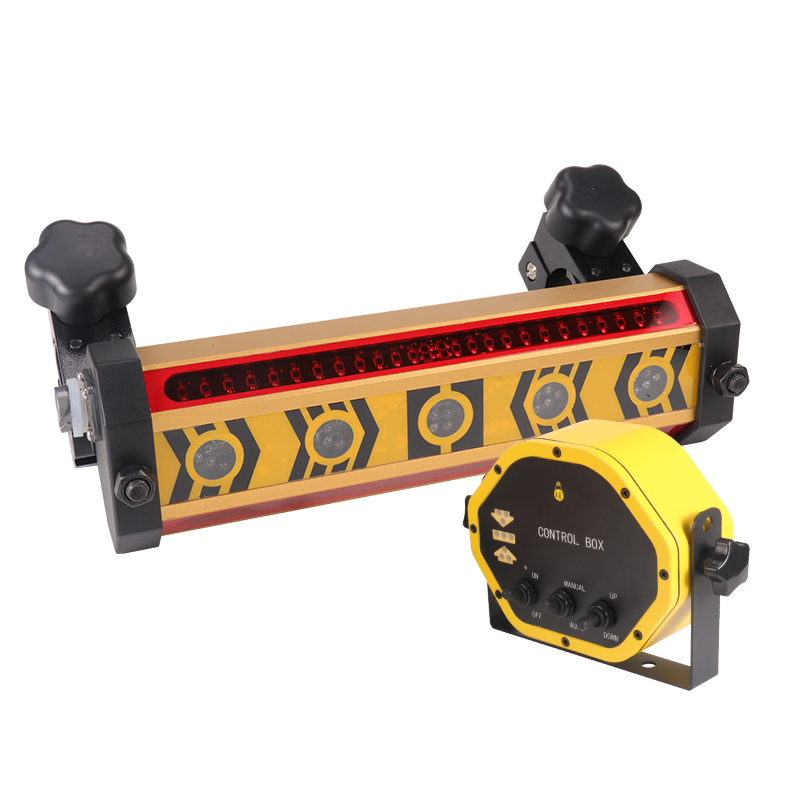
Machine Control Laser Receiver vs. Manual Grade Checking
| Feature | Machine Control Laser Receiver | Manual Grade Checking |
| Grade reference | Continuous laser reference | Periodic measurement |
| Machine stops | Fewer | More frequent |
| Ground personnel | Reduced need | Often required |
| Operator feedback | Immediate | Communicated manually |
| Large-area grading | More efficient | More time-consuming |
| Repeated checking | Simplified | Labor intensive |
| Workflow | Machine-based | Worker-based |
For projects that require frequent elevation checks, the Machine Control Laser Receiver can offer a more efficient workflow.
However, manual checking still has an important role. Surveyors and site personnel may need to perform independent verification, establish benchmarks, or confirm final elevations.
The best approach is therefore not necessarily to eliminate manual surveying, but to use machine-mounted laser guidance for routine grade control and reserve manual measurements for verification and critical points.
What Features Should You Look for in a Machine Control Laser Receiver?
360° Laser Reception
A 360 degree machine control laser receiver can detect rotating laser signals from multiple directions. This is especially useful when the construction machine changes position or orientation during operation.
Clear Grade Indicators
Bright LED indicators or a remote display can make above-grade, below-grade, and on-grade information easier for operators to understand.
Rugged Construction
Construction sites expose equipment to dust, water, vibration, and changing weather conditions. A rugged machine control laser receiver for construction equipment should be designed for demanding field environments.
Flexible Mounting
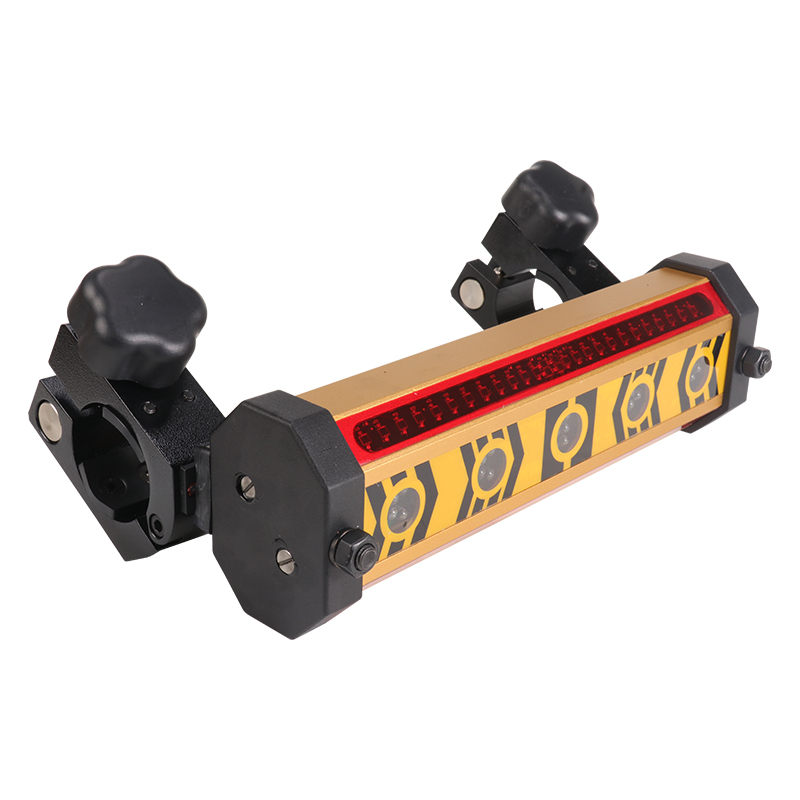
Magnetic and clamp mounting options can make installation faster and allow the receiver to be used on different machines. Current machine receiver systems commonly offer magnetic or screw/clamp mounting for flexible setup.
Long Battery Life
Long operating time reduces interruptions caused by frequent battery replacement or charging, which is important for full-day construction work.
Where Can a Machine Control Laser Receiver Be Used?
Excavation
A Machine Control Laser Receiver for excavators can help operators maintain the required digging depth and elevation.
Road Construction
Road projects require consistent grades and elevations. A laser receiver can provide an ongoing reference during earthwork and grading.
Drainage and Utility Work
Drainage pipes and utility trenches often require controlled elevations. Laser-based machine guidance can help operators maintain the required grade during excavation.
Building Pads and Foundations
Accurate excavation is important when preparing foundations and building pads. Continuous laser reference can help reduce unnecessary over-excavation.
Land Leveling
For large areas, a laser receiver for construction grading can help operators maintain a consistent elevation while moving material.
Which Method Saves More Time?
For projects involving frequent grade adjustments, a Machine Control Laser Receiver generally has the advantage in workflow efficiency.
Manual grade checking remains valuable for surveying, setup, verification, and quality control. However, using a machine-mounted laser receiver can reduce repeated measurements and unnecessary machine downtime during routine grading.
The greatest time-saving benefit comes from keeping the operator informed while the machine is working.
Instead of stopping repeatedly to ask, “Am I on grade?”, the operator can continuously monitor the laser reference and make adjustments as needed.
Buying Considerations for a Machine Control Laser Receiver
Machine compatibility – Make sure the receiver can be securely installed on your excavator, grader, bulldozer, or other equipment.
Laser compatibility – Check that the receiver works with the rotating laser system used on your job site.
Detection range and reception angle – A wider detection area can provide more flexibility during machine movement.
Accuracy settings – Choose suitable fine and coarse accuracy modes according to your grading requirements.
Mounting method – Magnetic and clamp mounting options can simplify installation and removal.
Durability – Look for a rugged housing and suitable protection against dust, water, and vibration.
Battery life – Long operating time is important for continuous field work.
Remote display – A cab-side display can make grade information easier for operators to monitor.
If you are looking for a reliable Machine Control Laser Receiver for construction grading, excavation, or earthmoving applications, contact K-LEVEL manufacturer for product information, specifications, and suitable machine control solutions.
Frequently Asked Questions
- What is a Machine Control Laser Receiver used for?
A Machine Control Laser Receiver detects rotating laser beams and provides grade information to construction machine operators. It is commonly used for excavation, grading, leveling, road construction, and site preparation.
- Can a Machine Control Laser Receiver be used on excavators?
Yes. Machine Control Laser Receivers for excavators are commonly used to provide laser-based elevation references during digging and grading operations.
- Does a laser receiver completely replace manual surveying?
No. A laser receiver is mainly designed to improve machine-based grade control and workflow efficiency. Surveying and independent measurements are still important for benchmarks, setup, verification, and final quality control.
- Is 360° reception important for machine control?
It can be very useful. A 360° machine control laser receiver can detect the rotating laser from different directions, helping maintain a continuous reference when the machine changes orientation.
- How does a machine receiver reduce construction time?
It reduces the need for repeated manual grade checks and unnecessary machine stops. Operators can receive grade information while working, allowing them to make adjustments more efficiently.
Conclusion
When comparing a Machine Control Laser Receiver vs. manual grade checking, the biggest difference is workflow efficiency. Manual checking requires repeated measurements, communication, and machine interruptions, while a machine-mounted laser receiver provides a more continuous grade reference.
For excavation, road construction, land leveling, drainage, and general earthwork, a Machine Control Laser Receiver can help operators work more efficiently, reduce unnecessary stops, and improve grade consistency.
Manual surveying still plays an important role in construction quality control. However, combining professional surveying with machine-based laser grade guidance can create a faster and more productive construction workflow.